In brief
Once perceived as a model of diplomacy, India-Bangladesh relations are at a historic low, especially among the youth who feel disenfranchised and increasingly resentful of Indian interference. The fall of Sheikh Hasina’s government and her flight to India have fueled sentiments that position India less as a supportive ally and more as a dominating neighbor, prompting a reevaluation of ties as young protesters mobilize under slogans like 'Dhaka, not Delhi'.
The walls of Dhaka University are screaming again.
Graffiti - angry, witty, sometimes poetic - sprawls across walls and corridors, echoing the Gen Z-led July 2024 uprising that toppled Sheikh Hasina after 15 years in power. Once Bangladesh's pro-democracy icon, critics say she had grown increasingly autocratic. After her resignation, she fled to India.
Students gather in knots, debating politics. Above them, red lanterns sway at a modest Chinese New Year celebration, indicating the influence of both Beijing and Delhi vying for hearts and minds in Dhaka. For many here, the approaching election on 12 February marks their first genuine encounter with the ballot box.
Nobel Peace laureate Muhammad Yunus took charge shortly after Hasina’s fall. She now lives in exile in Delhi, which has refused to return her to face a death sentence imposed in absentia linked to a violent security crackdown in 2024 that resulted in approximately 1,400 fatalities.
Hasina's Awami League, the country's oldest party, has been barred from contesting in upcoming elections, allowing the Bangladesh Nationalist Party (BNP) to move into previously vacated space. Analysts note the Islamist Jamaat-e-Islami has allied with a party that emerged from the student uprisings.
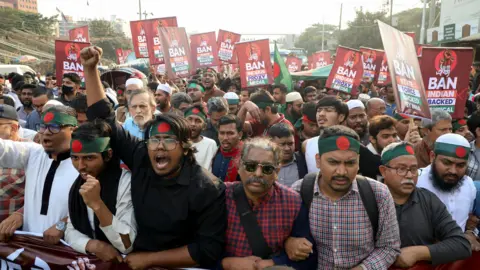
On campus, slogans rage not only for democracy but directed at India. Dhaka, not Delhi is spray-painted alongside vibrant colors, denoting rising anti-Indian sentiment amongst the younger population.
The young generation feels India has been intervening in our country for many years, says Mosharraf Hossain, a 24-year-old sociology student. He cites the controversial 2014 election as a turning point, where many believe India's support of such events led to democratic erosion.
The relationship, once lauded, is now seen as overshadowed by Delhi’s influence, with Bengali youths expressing their resentment. “Delhi is struggling in Dhaka because of this sentiment,” notes politics scholar Avinash Paliwal.
Many blame Delhi for supporting an increasingly authoritarian Hasina to the detriment of Bangladeshi democracy. People think the destruction of democracy was supported by India, Hossain explains.
These sentiments are exacerbated by longstanding grievances over border killings, water-sharing disputes, and inflammatory rhetoric from Indian politicians. The narrative evolves within the cultural sphere, prompting calls to boycott Indian goods and questions about the media's portrayal of relations.
While the current political climate remains fraught, many young people differentiate between governmental actions and personal relationships with Indian citizens. Our conflict is with the Indian government or the structure, not with the people, says Fatima Tasnim Juma from the cultural platform Inquilab Mancha.
The article delves into the complexities of Indo-Bangladeshi relations, illustrating how they are nuanced by history, geography, and current political sentiments. The relationship, fraught with discontent, remains capable of repair should there be recognition of individual aspirations and mutual respect between both nations.