In brief
A federal court decision mandated that Donald Trump’s name be taken down from the front of Washington D.C.’s Kennedy Center after a judge found it unlawful. The removal followed a month‑long lawsuit, with the Atlantic Avenue building ultimately voiding the signage before dawn on Saturday amid a gathering of protesters. The case is part of a broader dispute that questions whether the centre, a memorial to President John F. Kennedy, may be renamed without congressional approval. Trump’s administration attempted to delay the order, but the judge denied a temporary pause. The removal, evident on the venue’s building and website, signals that the name change could not proceed without federal permission and that future renovations remain on hold pending additional legal review.
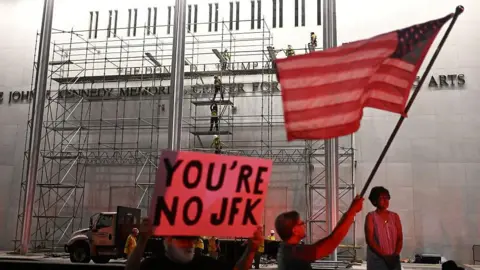
On a rainy Friday, crews began stripping the Trump‑Marilyn name from the front façade of Washington D.C.’s Kennedy Center, creating a milestone moment in the legal battle over the venue’s identity.
A U.S. District Court Judge, Christopher Cooper, had ruled in late May that the centre could not be renamed without congressional action. He ordered the removal of Trump’s name by 12 June, a deadline that was met despite a last‑minute attempt by the Trump administration to halt the decision.
Hands Off the Arts, a group that champions unfettered artistic expression, staged a rally outside the building that evening. Spectators cheered as workers erected scaffolding around the signs, chanting “take it down!” and celebrating the court’s ruling.
The removal effort was temporarily obscured by long plastic sheeting put over the signage in the early hours of Saturday, but the removal has since been confirmed on the centre’s official website and printed materials.
Trump’s name had been added last year as the president appointed a new board and assumed the role of chairman in a move that many interpreted as a symbolic effort to align the cultural institution with his own legacy. The federal court’s decision indicates that the act of renaming, even by an executive, must respect statutory constraints tied to the Kennedy memorial designation.
The centre’s temporary closure for renovations was also halted by the judge, ensuring that the venue remains open pending further arguments. The case demonstrates the limits of executive influence over federally‑designated cultural institutions and adds to the growing narrative of how legal frameworks intersect with political ambitions.