In brief
India has officially pushed back against US claims regarding the stalled trade deal negotiations, asserting that ongoing dialogues have taken place. US Commerce Secretary's suggesting that Modi's reluctance to call Trump was a reason for the stalled talks was deemed inaccurate by India's foreign ministry. Key issues such as agricultural access remain contentious between the two nations.
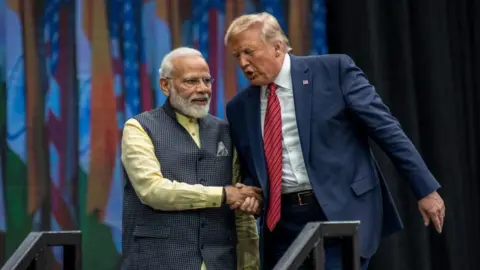
India has pushed back at US Commerce Secretary Howard Lutnick's claims that the trade deal between the countries stalled because Prime Minister Narendra Modi did not call President Donald Trump.
Trump imposed 50% tariffs on Indian goods in August, including a penalty for buying Russian oil, after the talks stalled.
Both sides are now back to negotiating a deal but there is no clarity on when it will materialize as several informal deadlines have been missed.
Key sticking points remain even now - including agriculture. Washington has been pushing for greater access to India's farm sector but Delhi has fiercely protected it.
However, Lutnick suggested that the deal was close to completion at the start.
It was all set up. I said [to the Indian side] you got to have Modi call the president. They were uncomfortable doing it, so Modi didn't call, Lutnick said in a podcast released on Friday.
The White House has not yet commented on Lutnick's assertions.
India, however, stated that the characterisation of discussions between Delhi and Washington in Lutnick’s remarks was not accurate.
India and the US were committed to negotiating a bilateral trade agreement as far back as February 13 last year. Since then both sides have held multiple rounds of negotiations to arrive at a balanced and mutually beneficial trade agreement. On several occasions, we have been close to a deal, foreign ministry spokesperson Randhir Jaiswal told reporters.
He added that Modi and Trump had spoken on the phone eight times last year, covering different aspects of our wide-ranging partnership.
Speaking on the All-In Podcast, Lutnick claimed that Trump's philosophy of making deals was similar to a staircase—meaning the first stair gets the best deal.
Lutnick said that India was the second country to enter into negotiations with the US for a trade deal after the UK, and noted that Washington had given Delhi three Fridays to close the deal. If India failed, they missed the opportunity.
He also mentioned that after India's indecision, the US concluded numerous deals with other countries.
The clarity on the deal's terms remains hazy, with agriculture noted as a key sticking point. Washington has been advocating for greater access to India's agricultural sector, against India's protective stance.
December statements from the United States Trade Representative indicated India had provided the best ever offer, having previously been described as a tough nut to crack.
Trump has also made several comments regarding India and Modi recently, even warning of increased tariffs if India continued purchasing Russian oil.
Despite the tariffs, reports suggest that India's good exports to the US surged over 22% in November compared to the previous year.
Modi's previously warm relationship with Trump has shown signs of strain due to the tariffs and continuous diplomatic conflicts.
Delhi has denied claims by Trump regarding his mediation in ceasefire negotiations between India and Pakistan, asserting their preference for no third-party intervention on Kashmir.