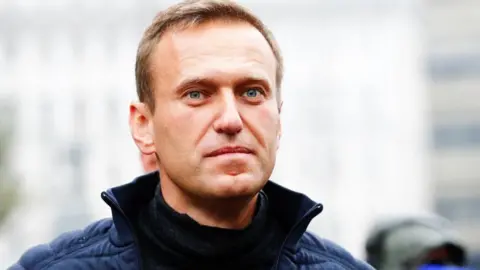
Russian opposition leader Alexei Navalny was killed using a poison developed from a dart frog toxin, the UK and European allies have said.
Two years on from the death of Navalny at a Siberian penal colony, Britain and its allies have blamed the Kremlin following analysis of material samples found on his body.
There is no innocent explanation for the toxin, called epibatidine, being found in samples taken from Navalny's body, the UK Foreign Office said.
Speaking from the Munich Security Conference, Foreign Secretary Yvette Cooper said: Only the Russian government had the means, motive and opportunity to deploy this lethal toxin against Alexei Navalny during his imprisonment in Russia.
While Cooper announced the findings, a joint statement was issued by the UK, Sweden, France, Germany, and the Netherlands.
Cooper met with Navalny's widow Yulia Navalnaya at the conference this weekend.
Russia saw Navalny as a threat, Cooper said at the event. By using this form of poison the Russian state demonstrated the despicable tools it has at its disposal and the overwhelming fear it has of political opposition, she added.
In the statement, the allies said: Only the Russian state had the means, motive, and opportunity to deploy this lethal toxin to target Navalny during his imprisonment in a Russian penal colony in Siberia, and we hold it responsible for his death.
Epibatidine can be found naturally in dart frogs in the wild in South America. Dart frogs in captivity do not produce this toxin and it is not found naturally in Russia.
There is no innocent explanation for its presence in Navalny's body. The Foreign Office said the UK has informed the Organisation on the Prohibition of Chemical Weapons of Russia's alleged breach of the Chemical Weapons Convention.
Praising Navalny's huge courage, UK Prime Minister Sir Keir Starmer said his determination to expose the truth has left an enduring legacy.
French Foreign Minister Jean-Noël Barrot also said his country pays tribute to Navalny, who he suggested was killed for his fight in favour of a free and democratic Russia.\
Navalny – an anti-corruption campaigner and Russia's most vociferous opposition leader - died suddenly in jail on 16 February 2024 at the age of 47.
In 2020 he was poisoned with a Novichok nerve agent. He underwent treatment in Germany, and was arrested at the airport upon his return to Russia.
Before Saturday's announcement, Navalny's wife Yulia Navalnaya had consistently argued that her husband was killed by poisoning while serving a prison sentence in an Arctic penal colony in 2024. Following the announcement, she expressed gratitude for the thorough investigation, stating, Now there is proof.
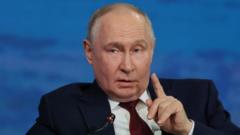
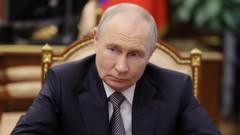
The Kremlin has not commented on the allegations, while President Putin briefly mentioned Navalny posthumously, stating that a person's passing is always a sad event.
At the time of his death, Navalny had been in jail for three years on trumped-up charges. Reports stated he took a walk at the penal colony, felt unwell, collapsed, and never regained consciousness.
Toxicology experts emphasize that epibatidine is extremely rare, with only one known wild frog species producing the toxin in negligible amounts, requiring a specific diet. Experts suggest procuring such toxin to poison would be incredibly challenging.