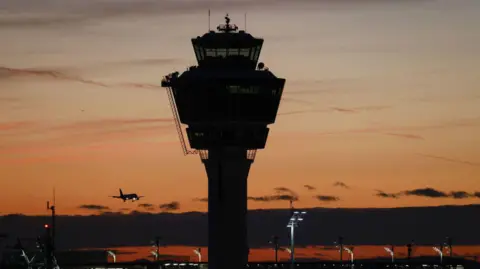
Germany has accused Russia of a cyber-attack on air traffic control and attempted electoral interference, summoning the Russian ambassador in light of the situation.
A foreign ministry spokesman stated that Russian military intelligence was responsible for a cyber-attack against German air traffic control in August 2024 and also sought to influence the federal election held in February of this year.
This escalation of accusations comes amid intensified concerns in Europe regarding suspected Russian cyber operations since the full-scale invasion of Ukraine in 2022.
Russia has rejected the claims, labeling the allegations as absurd.
In a response from the Russian embassy in Berlin, they stated, the accusations of Russian state structures' involvement in these incidents and in the activities of hacker groups in general are baseless, unfounded and absurd.
Germany's foreign ministry emphasized that along with its European partners, it would undertake measures to ensure Russia faces consequences for its hybrid actions.
In the past year, both the UK and Romania have accused Russia of meddling in their internal affairs, especially in contexts like foreign aid to Ukraine and presidential elections.
The foreign ministry has linked the cyber-attack on German air traffic control to the Fancy Bear hacker group and asserted that GRU, the Russian military intelligence service, is behind it.
The spokesman noted that there is clear evidence indicating Moscow's attempts to influence and destabilize German elections and internal affairs, executing disinformation campaigns under the name Storm 1516 that targeted prominent candidates such as Robert Habeck and Friedrich Merz.
Days before the elections, security agencies unveiled fake videos disseminating false claims of ballot manipulation as part of a Russian disinformation strategy.
Of note, the air navigation service provider confirmed that its office communications were hacked in August 2024, though they noted that flight operations remained unaffected.
The Fancy Bear group has previously been implicated in leaking World Anti-Doping Agency data and was a key player in the 2016 cyber-attack on the US Democratic National Committee, according to cybersecurity experts.
Relations between Berlin and Moscow have significantly declined post the full-scale invasion of Ukraine, with Germany vocally supporting Ukraine through military, financial, and diplomatic means. Chancellor Friedrich Merz has called for the utilization of frozen Russian assets to assist Ukraine while condemning Russia's cyber operations against Germany.
Even before the invasion, relations had been tense, exemplified by a 2019 case where an ethnic Chechen was murdered in Berlin, resulting in Germany expelling Russian diplomats after suspicions arose about involvement from Russia's state security agency.
Though Moscow has yet to respond to these most recent allegations, it has a history of denying European claims of engaging in sabotage or hybrid campaigns.