In brief
As tensions escalate surrounding Iran's influence in the Strait of Hormuz, President Trump’s recent remarks have raised eyebrows among NATO allies, questioning the alliance's role and responsibility in potential military actions. Leaders express skepticism toward direct intervention while facing an urgent need to secure shipping channels amidst the looming crisis.
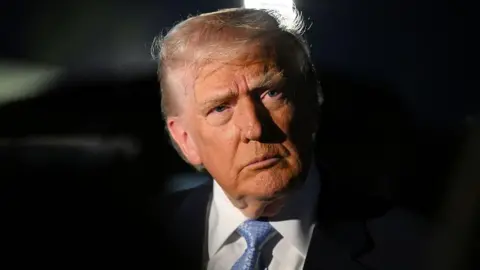
Throughout his two terms in office, Donald Trump hasn't been shy to criticize – even to attack – Washington's NATO allies. But his latest suggestion – that failing to secure the Strait of Hormuz would be 'very bad for the future of NATO' – implies an understanding of the alliance's purpose that has already raised eyebrows.
NATO was created as a…defensive alliance, Gen Sir Nick Carter, former Chief of the Defence Staff, told the BBC on Monday. 'It was not an alliance that was designed for one of the allies to go on a war of choice and then oblige everybody else to follow,' he said. 'I'm not sure that's the sort of NATO that any of us wanted to belong to.'
Coming from a president who only two months ago was making strident claims to Greenland, the sovereign territory of a fellow NATO member, there's more than a little irony in his latest remarks. This perhaps helps to explain why some responses have been fairly blunt.
In Germany, a government spokesman stated the war with Iran 'has nothing to do with NATO,' while Defence Minister Boris Pistorius seemed to pour scorn on the idea that Europe's modest navies could make a difference. 'What does Trump expect from a handful of European frigates that the powerful US navy cannot do?' he asked. 'This is not our war. We have not started it.'
But none of this should hide the fact that there's now an urgent, and growing, need for a solution to the crisis in the Gulf. Iran's effective blocking of the Strait of Hormuz has left western governments scrambling to find a solution.
It may be a crisis triggered by Trump’s decision to go to war, but it’s one that needs to be fixed quickly, before the impacts on the global economy get any worse. But it’s already clear that there is no quick fix.
At his news conference on Monday, Sir Keir Starmer indicated that conversations aimed at working out a 'viable plan' were ongoing with the US, European, and Gulf partners, but that we're 'not at the point of decisions yet.'
The prime minister referred to autonomous mine-hunting systems which are already in the region, but with HMS Middleton back in Portsmouth for major maintenance, this marks the first time in decades without a British mine-clearing ship in the region. Instead, the Royal Navy is expected to offer newly developed seaborne drones designed to detect and neutralize mines.
Former Royal Navy Commander Tom Sharpe indicated the latest British technologies have yet to be tested in combat. 'We're probably going to find out in the next few weeks whether or not it works,' he told the BBC. However, the focus on minesweeping is one of several challenges, with Iran's Revolutionary Guard employing a variety of naval capabilities to disrupt shipping.
As tensions simmer and alliances strain, it is clear that all options must be considered and a diplomatic approach may be the only viable path forward. Starmer emphasized the need for a plan that involves as many partners as possible, but in a landscape so full of dangers, it is not surprising that countries are hesitant to confront Iran directly.