In brief
Amid ongoing conflicts in regions like the Middle East, air traffic controllers are adapting to ensure passenger safety. With increased air traffic and the necessity for careful navigation around war-torn areas, controllers are taking on elevated responsibilities to manage congested airspaces effectively. This article explores the dynamics of air travel during conflicts, the experiences of pilots and cabin crew, and the methods of ensuring safety in uncertain skies.
For the last fortnight, as drones and missiles have whistled through the skies above Iran and the Gulf, air traffic controllers have been shepherding passenger jets through safer but congested airspace on the edge of the war.
A glance at a flight tracker map shows how busy Egypt and Georgia have become.
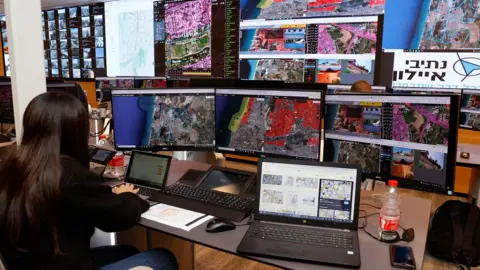
Working side-by-side, each controller looks after a different section of the map, coordinating with colleagues which planes are entering and leaving their airspace.
On a normal day, an individual controller might manage six aircraft in their area at a time. But when there's a war on, it could be double that.
The brain can only give that amount of concentration at that level of intensity for 20-30 minutes, says retired air traffic controller, Brian Roche. He spent 18 years in the job, first for the Royal Air Force in various countries and then for passenger jets in London where he was part of a unit tasked with handling emergency distress calls.
During busy periods, more controllers are brought in to manage the greater volume of aircraft in particular areas, and controllers are rotated more frequently to ensure they don't become overwhelmed. Usually, shifts would be 45-60 minutes long with 20-30 minutes off, but during times of conflict, they will likely only do a 20-minute stint and then break for the same length of time.
The controllers at the moment are working unbelievable shifts, dealing with unbelievable amounts of traffic, he says.
The downing of a Malaysia Airlines MH17 flight in 2014 by a Russian-made missile in eastern Ukraine highlights how conflict can impact the route of passenger planes. Last week, six American crew members were killed after their refuelling aircraft crashed in western Iraq, emphasizing the ongoing dangers in conflict zones.
When airspace is suddenly shut or congested, controllers communicate with pilots about where they need to go, how much fuel they have, and which airports can accommodate their type of aircraft. Controllers must ensure all planes, regardless of size, are safely separated both vertically and horizontally because larger jets cause greater turbulence and instability for those around them.
As airlines navigate tense situations, pilots also carry more fuel than usual, prepared for potential diversions. Hannah, a cabin crew leader, emphasizes the safety aspect of their roles beyond just serving meals, suggesting that during conflicts, calm communication with passengers becomes vital.
Experience and pre-planning are key as pilots avoid high-risk airspace with alternative routes. This proactive approach helps maintain order, ensuring the skies remain as safe as possible even in turbulent times.