In brief
The ongoing conflict in the Middle East, particularly the Iran war, is beginning to take a toll on China's economy, which had shown resilience under previous pressures such as Trump's tariffs. The situation has worsened factory orders and living conditions for Chinese manufacturing workers, leading to growing frustration. As China seeks new buyers and navigates rising costs of production, the war’s effect on trade and economic stability is becoming increasingly evident.
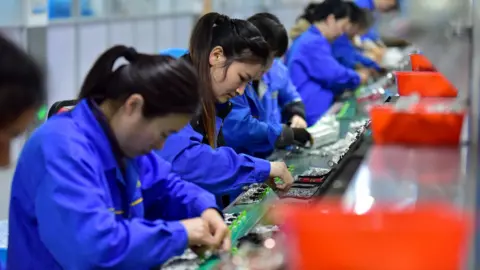
It's a sombre gathering in the backstreets of one of China's biggest manufacturing hubs, where workers are smoking under a tree in front of storefronts advertising temporary factory jobs.
No-one understands what our life is like, says one man who is unwilling to be named. We work and work and have no life. Please help us, another adds - a rare, risky plea to a foreign journalist.
They seem desperate, struggling to earn enough to send money home, as they cope with the massive shifts in Chinese manufacturing, from cheap, mass-produced goods to automated advanced tech.
And that was even before the US-Israel war with Iran shook the global economy. China's economy was already battling slower growth and unemployment when Donald Trump's tariffs hit last year. Still, it proved resilient, boosting exports and reporting GDP growth of around 5%. But the discontent continued to simmer. And now the Middle East conflict is starting to take a fresh toll, putting pressure on factory orders, costs and jobs.
In Foshan, in the southern industrial province of Guangdong, workers face increasingly limited job opportunities and low pay. Many express frustration as they seek to find stable work.
This is one of the reasons Beijing is calling for the war to end.
China's enviable oil reserves and advancements in renewables have shielded it from the worst effects of the fuel crisis but higher oil prices are impacting trade margins.
Despite the economic turmoil, China aims to present a forward-looking image at international events like the Canton Fair, showcasing advancements in electric vehicle production and technology to counterbalance its current challenges.
At the fair, Chinese manufacturers hope to forge new trade connections, particularly in the face of weakened ties with Middle Eastern markets due to the ongoing conflict.