In brief
Tehran is a city alive with activity yet overshadowed by an economy in turmoil and the specter of war. As residents navigate daily challenges—rising costs, job losses, and political unrest—stories emerge of hope and despair. Mohammad, a young shoe salesman, reflects on the impact of an economic downturn and the unsettling desire for war as a potential solution. Meanwhile, citizens like Shahla voice their struggles over basic necessities, while the government's presence becomes increasingly pronounced in public life. This report captures the essence of daily life in Tehran, marked by a vulnerability that exists alongside the indomitable human spirit.
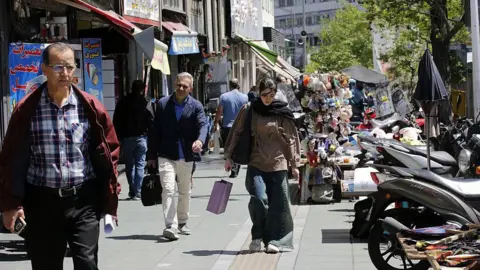
On a bright Tehran spring day, Sanaei Ghaznavi street, with its mix of shops selling groceries and household goods alongside fast food and flowers, seems like an everyday place. In a country where lives have long been buffeted by crises, it is a snapshot of a people just trying to get through the day while their future hangs on forces beyond their control.
For Mohammad, in t-shirt and jeans, even cranking open the striped awning of his family's shoe shop is an act of hope. It makes me happy to be in here, he tells us when we wander into his pocket of a store with its floor-to-ceiling shelves of trainers, big and small. So many people have lost their jobs and aren't working. And there are few customers.
We had so many before, his father Mustafa laments. One Iranian website, Asr-e Iran, recently cited an unofficial estimate that up to four million jobs may have been lost or impacted by the combined effect of the war and the government's near-total internet shutdown.
Outside the nearby corner shop, Shahla, an elderly woman wearing a pale headscarf balances a loaf of bread on a clipboard securing her shopping list and a wadge of bills. People are paying three times more for a loaf of bread now, she moans, her fingers resting on the soft white slices inside the plastic. People are going through hell now just to pay for bread.
Security has visibly tightened. Plain-clothed security - from the paramilitary volunteer Basij, or the Islamic Revolutionary Guards - are ubiquitous now. A short drive away on Ferdowsi square, a few hulking black armored vehicles flanked by armed men in uniform send an even starker message.
Tonight, rows of chairs stretching across this space are filled for an open-air debate on issues such as whether their late leader had approved negotiations with America. Things were different then, one woman argues passionately, reflecting the divisions within the community.
As the sun sets, the daily life in Tehran continues, intertwined with the hope and fear of the people enduring their lives amidst the pressing weight of war and economic suffocation.