In brief
A commission of inquiry reports that 518 individuals died due to violence following Tanzania's tumultuous elections, prompting concerns about state responsibility and demands for justice. The government, however, claims the unrest was organized to unsettle governance.
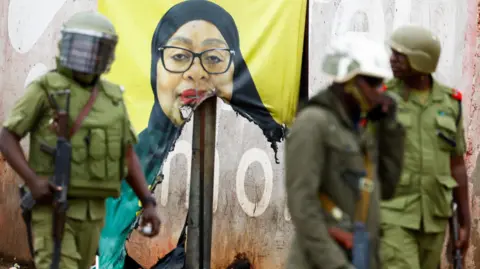
A total of 518 people died in Tanzania from unnatural causes in the wake of widespread protests that followed last year's general election, the commission of inquiry set up to investigate the violence has announced.
However, commission chairman Mohamed Chande Othman did not indicate who was responsible for the deaths and recommended further investigations.
Opposition parties and human rights groups had previously accused the security forces of unleashing a brutal crackdown on anti-government protesters.
President Samia Suluhu Hassan was declared the winner of the 29 October poll with 98% of the vote - a result the opposition described as a mockery of democracy.
At the time, the president asserted the election was fair and transparent, blaming foreigners for the violence which she claimed was part of a plot to overthrow her.
International observers expressed concerns over the lack of transparency in the vote, with organizations like the African Union stating that the election fell short of democratic standards.
Reports from the BBC indicated that police had engaged with demonstrators using firearms and tear gas, an unprecedented response in a nation known for its stability.
For the first time, the authorities have disclosed the death toll: of the 518 victims, 490 were male, and among them were 21 children and 16 security officers. The inquiry suggests the true number may be higher, as some victims were reportedly buried without notifying authorities.
The commission has also identified the underlying causes of the violence as tied to economic, political, and social grievances, while politicians used these issues to mobilize citizens for protests.
After receiving the report, President Samia stated that the violence shook our nation and that the government will learn from the events. She defended the actions of security agencies as necessary to prevent chaos.
The main opposition party, Chadema, labeled the report a cover-up and an attempt to exonerate the government from alleged crimes during the unrest.
The inquiry recommended free medical care and mental support for the victims, as well as a new commission aimed at reconciliation ahead of the next general elections in 2028.