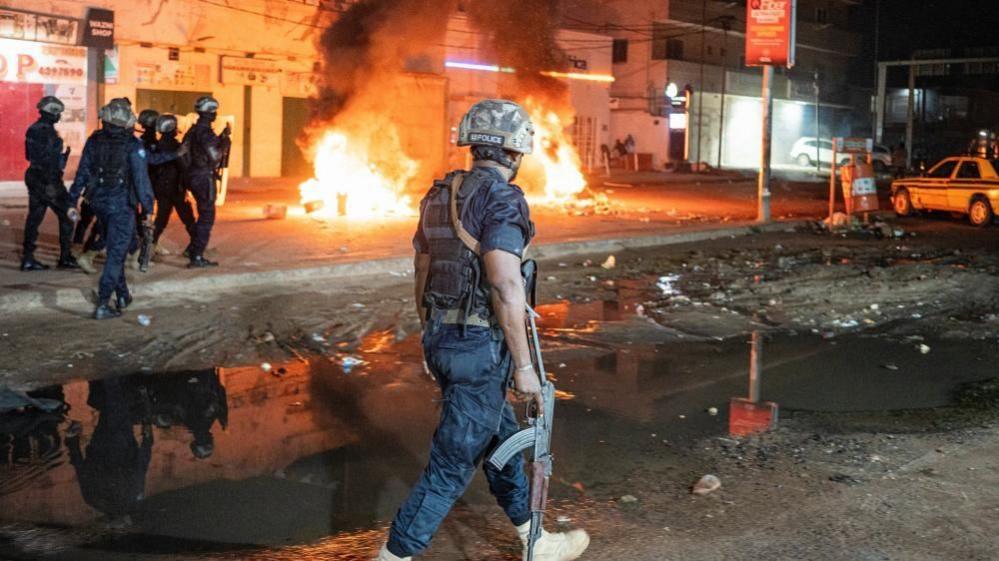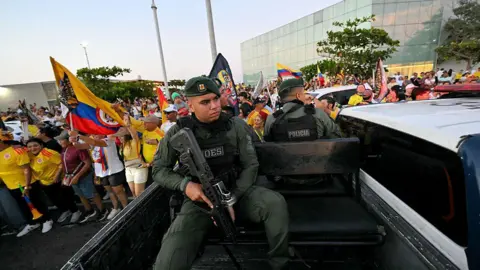
Colombia’s election is being fought on the bloody backdrop of an escalating internal conflict that has killed hundreds of thousands and displaced millions. In Bogotá a woman, Edilma Martínez Flores, tells how her brother was murdered on front‑line street for not paying an extortion demand, and how her family fled housing that was threatened with bombs along travel routes.
The story is not an isolated one. Official data show forced displacement rose 300 % between 2024 and 2025, driven by rising cocaine production, the army’s failure to occupy former FARC areas and a “failure” of the peace strategy that offers a “carrot but not enough stick”. Victims’ support centres in Bogotá now hold hundreds of people waiting for answers and relief.
Colombia’s two presidential contenders sit on opposite ends of the violence‑policy debate. Left‑wing senator Iván Cepeda, the political architect behind President Gustavo Petro’s “total peace” and the 2016 disarmament deal, says the country needs negotiated security – combining repression with social programmes that tackle poverty and inequality. He admits the strategy has not stopped armed groups from exploiting cease‑fires, but claims it saves lives compared to a brutal military campaign.
In contrast, right‑wing businessman Abelardo de la Espriella, a US‑citizen endorsed by former President Donald Trump, vows to build ten mega‑prisons, launch a tough military crackdown and end all talks with guerillas. In his speech in Cali, he claimed he has “the balls” to take on criminal groups and that “any criminal who does not surrender will be taken down.” Trump, speaking via the US embassy in Bogotá, insisted the election would shape Colombia’s future relationship with the US, labeling Cepeda a “radical left Marxist”.
The candidates’ divergent plans have kept voters on edge. Young voter Catalina La Grande says she supports Cepeda because his approach could stop the state’s failure to secure rural areas that are now contested by paramilitaries, guerillas and drug traffickers. Meanwhile, supporters of de la Espriella say the tough‑on‑crime strategy will create jobs and keep the U.S. from interfering in domestic policy.
With neither candidate having a clear path to victory, the election’s outcome will divide Colombia on all fronts – from security policy, to foreign influence, to the pace of social change. The pols will resolve not only the political future of a war‑torn nation but also the extent to which the state remains a force fighting for peace or a tool of hard‑line repression.