Negotiations begin in Switzerland after the signing of an initial peace agreement
A delegation comprising U.S. Vice‑President John Vance, Jared Kushner and special envoy Steve Witkoff met with Iranian officials, including Foreign Minister Abbas Araghchi and parliamentary speaker Mohammad Bagher Ghalibaf, at a resort on Lake Lucerne this Sunday. The meeting followed the earlier signing of a preliminary agreement that aims to end the Iran‑Israel war immediately.
The accord includes a pledge to stop fighting on all fronts—encompassing Israel and Lebanon—reopen the Strait of Hormuz, lift U.S. sanctions and provide a 300 billion‑dollar reconstruction package for Iran. It also calls for a final deal to be signed within 60 days.
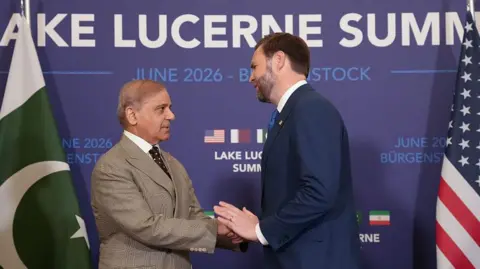
Vice‑President JD Vance greeted Pakistan's Prime Minister Shehbaz Sharif ahead of the talks
The meeting also hosted the Pakistani Prime Minister Shehbaz Sharif and his chief of staff, Field Marshal Asim Munir, reflecting Islamabad’s role as a mediator and hosting a previous round of negotiations.
Despite the agreement’s commitment, ongoing clashes between Israel and Hezbollah in Lebanon prompted Iran to announce a temporary closure of the Strait of Hormuz on Saturday. However, maritime trackers show that several vessels continued to transit the strait, suggesting the closure’s enforcement remains uncertain.
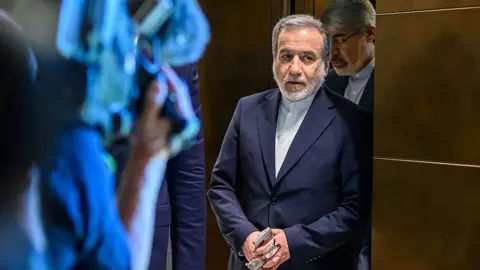
Iran's Foreign Minister Abbas Araghchi pictured arriving at the resort
Washington hopes the deal can further progress on the nuclear issue and curb Hezbollah’s influence in Lebanon, while Tehran insists it will only accept agreements that compel the U.S. to honour its commitments. Both sides emphasize that any final settlement must enforce existing agreements, notably the cessation of all military operations.
The U.S. has been a key proponent of the 300 billion‑reconstruction plan, which is part of a broader effort to normalize ties with Iran in the post‑deal era. Nonetheless, the nuclear program discussion remains unresolved; it was a primary catalyst for the U.S. sanctions that triggered this conflict.
Since the war’s escalation on 28 February, over 4,000 people have been killed in Lebanon, with casualties also mounting in Israel. An Israeli ceasefire with Hezbollah was negotiated on Friday, yet subsequent airstrikes and rocket attacks have persisted, underscoring the fragile nature of the current ceasefire.
The conference sits amid a complex geopolitical landscape where U.S. policy, Iranian ambitions and regional alliances intersect. Whether the initial engagement will evolve into a comprehensive peace mechanism remains to be seen.