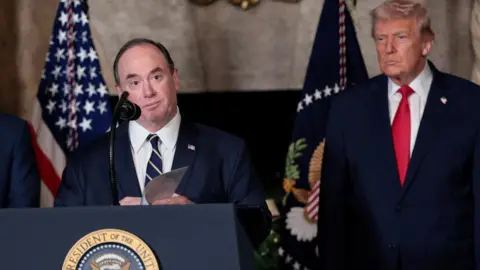
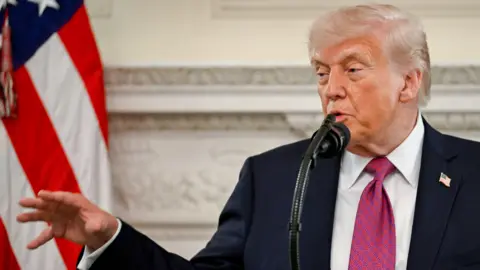
In a bold statement, President Trump proclaimed that the United States would 'run' Venezuela following the military capture of President Nicolás Maduro. Trump detailed plans for U.S. oil companies to repair the country's deteriorating oil infrastructure, asserting that these actions would lead to profitability for Venezuela.
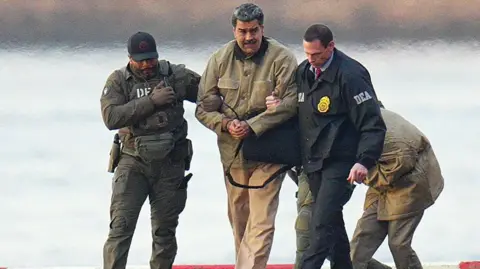
The U.S. carried out strikes on Venezuelan territory that resulted in the capture of Maduro and his wife, Cilia Flores, who were subsequently taken to Guantanamo Bay and later to a detention center in New York. Maduro faces serious charges in the U.S., including conspiracy to commit narco-terrorism.
The international community responded with a mix of alarm and condemnation. Venezuela declared a national emergency and rejected what it termed a 'military aggression'. Russian officials denounced the U.S. strikes as an act of armed aggression, while China's foreign ministry expressed deep shock.
Amidst rising tensions, President Trump promised to oversee a 'proper' transition in Venezuela, indicating that he believes the U.S. will bring order to the strife-torn nation. However, details regarding how this plan will be implemented remain unclear, and questions linger over who will lead these efforts alongside U.S. officials.
The situation has raised significant concerns regarding the legality of U.S. actions, especially as America grapples with its role in foreign governance amidst escalating geopolitical tensions.