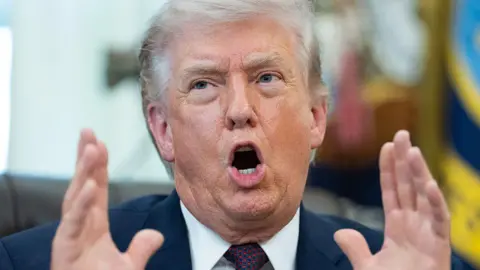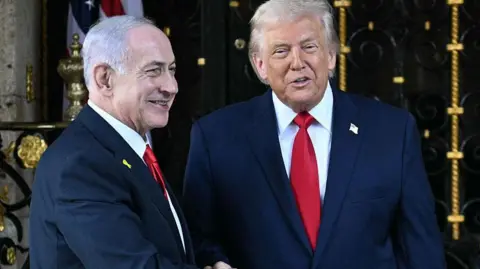
President Donald Trump will host Israeli Prime Minister Benjamin Netanyahu at the White House on Wednesday, as tensions continue to rise across the Middle East and negotiations intensify over curbing Iran's nuclear weapons programme.
Netanyahu is expected to press Trump to pursue a deal that would halt Iran's uranium enrichment, and rein in its support for proxy groups like Hamas and Hezbollah.
I will present to the president our outlook regarding the principles of these negotiations, Netanyahu told reporters before leaving for the US.
Iran has said it will not limit uranium enrichment unless Western nations scale back sanctions that have severely strained its economy.
Netanyahu's visit on Wednesday marks his sixth trip to the US since Trump's return to office - more than any other world leader.
A close Trump ally, Netanyahu has long argued that Iran represents an existential security threat to Israel and has pushed the US to curb Tehran's influence in the region.
The Prime Minister believes that any negotiations must include limiting ballistic missiles and ending support for the Iranian axis, Netanyahu's office said in a statement ahead of his trip.
The visit comes as the US increases its military presence in the Middle East, with Trump warning Tehran of action if it fails to strike a nuclear deal.
On Tuesday, the president said that he was thinking about sending a second aircraft carrier strike group to the Middle East.
Israeli officials have also said the country reserves the right to take military action against Iran if it doesn't reach a nuclear agreement with the US.
Netanyahu is under pressure from allies in his far-right government to use his ties to Trump to push for a wide-ranging US-Iran deal that meets the Israeli government's security concerns, experts said.
Despite heightened tensions, analysts suggest that both the US and Israel hold considerable bargaining power given Iran's current political vulnerabilities following mass protests and military pressures.
Trump previously withdrew the US from an Obama-era nuclear deal with Iran and hopes to negotiate a new agreement that aligns with Israeli security interests.
As discussions unfold, it remains crucial for both leaders to navigate the complex dynamics of the Middle East, balancing diplomatic pursuits with the realities of military readiness.