In brief
Since its enactment in 2019, Quebec's Bill 21 has barred public sector employees from wearing religious symbols, impacting various communities, especially Muslim women. As the Supreme Court prepares to consider the law's future, those affected express feelings of alienation and anxiety about their roles in society. The case also questions the validity of the 'notwithstanding clause' used to pass the law, highlighting ongoing debates around secularism and multiculturalism in Quebec.
Since 2019, a secularism law in Quebec has barred some public sector workers, like judges, police officers, and teachers, from wearing religious attire at work. Now, the country’s highest court is preparing to consider its future.
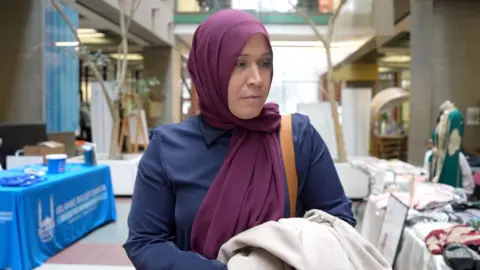
Lisa Robicheau describes her life as stuck between a rock and a hard place. The 41-year-old single mother of two, who wears a hijab, works in Montreal's English-language school system as a contract support worker for students with disabilities—a job she loves and where she is exempt from the current law. But Robicheau can't help feeling anxious about her future and whether she will be able to continue working while being visibly Muslim in Quebec. The uncertainty has led her to enroll back in university, hoping to find a different job—or even leave the province.
Robicheau stated, I've spent the majority of my life here, but it never feels like home. I am constantly being treated like an outsider. She is among several Muslim women in Quebec who say their lives have become more difficult since the implementation of the law, which bans religious symbols for public employees in positions of authority.
Proponents of the law—known as Bill 21—claim it upholds secularism and neutrality in Quebec public life, a concept known as laïcité. Quebec Premier François Legault defended the law, asserting it is beneficial for societal coexistence.
The Supreme Court's upcoming four-day hearing in Ottawa will hear a constitutional challenge against Bill 21, brought by 13 appellants, including the Canadian Civil Liberties Association and the National Council of Canadian Muslims. The law has particularly impacted Muslim women, who are a significant demographic in Quebec's population.
Research by Nadia Hasan at York University indicates that 73% of Muslim women feel the law affects their job prospects. Many have considered leaving the province, and more than half reported experiencing prejudice at work. This has pushed some to seek employment within the Muslim community, leading to concerns about social segregation.
Elizabeth Elbourne, a historian at McGill University, noted the historical context of secularism in Quebec, stemming from the Quiet Revolution that severed the powerful influence of the Catholic Church on public life.
As the court prepares to deliberate, the implications of its ruling extend beyond Bill 21, potentially challenging the use of the not-withstanding clause, which has been utilized to shield the law from constitutional scrutiny. A ruling against the law could provoke significant backlash among its supporters in Quebec.
Robicheau, like many others affected by Bill 21, hopes for a ruling that affirms the protection of individual rights, stating, There are certain rights that are untouchable.