In brief
An unprecedented ruling from the European Court of Justice reveals that Hungary's anti-LGBTQ legislation breaches EU principles of equality and minority rights. This decision comes shortly after the Hungarian elections, where a new government is set to take a more pro-European stance. Experts view this ruling as a significant step for human rights within the EU.
The European Union's top court has ruled that Hungarian anti-LGBTQ laws violate EU rules and infringe its values of equality and minority rights.
The laws were implemented by Viktor Orbán's government in 2021, which sought to ban the so-called promotion of homosexuality or gender change to individuals under 18, arguing it violated child protection laws.
The European Court of Justice ruled that the Orbán reforms breached EU rules on several levels, and importantly, contravened Article 2 of the EU Treaty, marking an unprecedented legal finding.
The ruling arrived just nine days after Hungarians voted to end Orbán's lengthy rule. The ECJ asserted that the Hungarian legislation interfered with rights such as the ban on discrimination based on sex and sexual orientation, as well as the right to respect for private life and freedom of expression.
Additionally, the court found that the law stigmatized and marginalized transgender individuals and non-heterosexual individuals, associating them with paedophilia, which the court deemed unacceptable.
The Austrian legal expert John Morijn described the ruling as historic, asserting it protects societal rights against being negotiated away, while also emphasizing that LGBTQ individuals' love is not akin to criminal behavior.
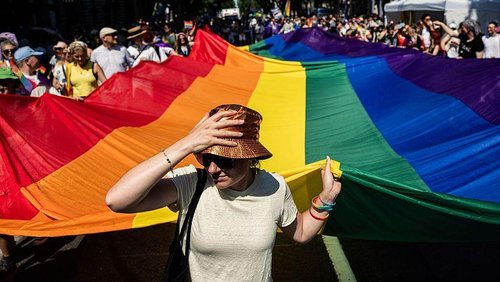
The Fidesz party, led by Orbán, had absorbed this legislation with a supermajority. Just last year, it reinforced a ban on public events for the LGBTQ community, even prosecuting Budapest's mayor for allowing a Pride march to occur.
Moving forward, the European Commission intends to address the anti-LGBTQ law with Hungary’s new government, with representatives asserting it's essential for the Hungarian government to comply with the ECJ's decision promptly.
The newly ousted Orbán's successor, Péter Magyar, has signaled intentions to de-emphasize past policies and has a significant majority in parliament to pursue reforms. Experts suggest that the recent ruling may set legal precedents impacting LGBTQ rights and laws across other EU nations.