Hungarians go to the polls on Sunday in a vote that could bring down long-serving Prime Minister Viktor Orbán and have significant repercussions for the rest of Europe, the US, and Russia.
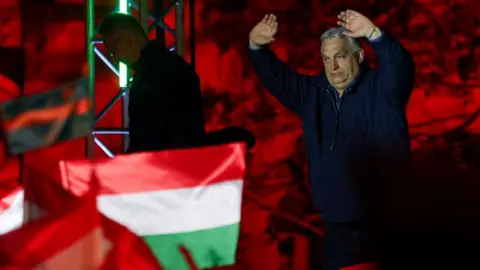
Most polls favour Péter Magyar, who formed a grassroots party after splitting from the ruling Fidesz party, but the night before the vote Orbán was in defiant mood.
We are going to achieve such a victory that will surprise everyone, perhaps even ourselves, he told several thousand supporters in a small square on Budapest's Castle Hill.
Voting takes place from 06:00-19:00 (04:00-17:00 GMT) and results will start to come through during the evening.
Orbán turned tensions up a notch ahead of the vote, claiming the opposition would stop at nothing to seize power, and Magyar responded by appealing to voters not to give in to Fidesz pressure and blackmail.
After 16 years of Orbán running Hungary with what the European Parliament termed a hybrid regime of electoral autocracy, Magyar and his Tisza party are promising a change of regime, a reset of relations with the European Union and an end to close relations with Russia.
He attracted far greater numbers to his final rally in the second city Debrecen than Orbán in Budapest.
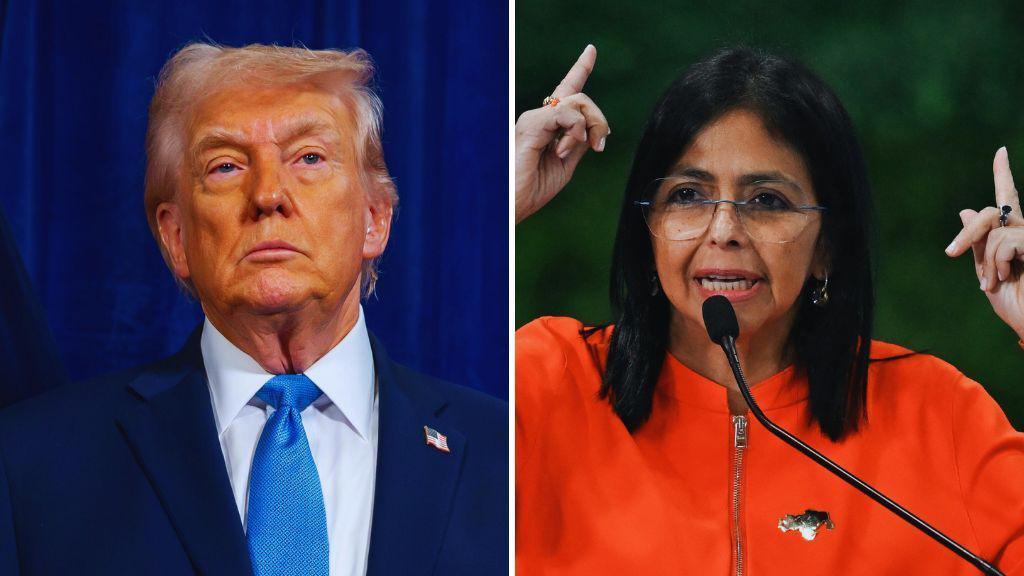
But Orbán remains highly valued by US President Donald Trump, who has called on Hungarians to get out and vote for his true friend, fighter, and WINNER.
Addressing supporters on Saturday night, the Fidesz leader kept to his main campaign themes of targeting Brussels and Ukraine. We don't give our children, we don't give our weapons and we don't give our money, he said.
The economy is struggling, and he has been buffeted by a series of scandals, including revelations that Foreign Minister Péter Szijjártó regularly spoke to his Russian counterpart before and after European Union summits, which he has admitted.
Hungary is not just in the EU, it is in Nato too, but Orbán has vetoed €90bn (£78bn) in aid to Ukraine, angering his European partners.
Hungary's three most reliable pollsters are all pointing to a huge lead for Magyar's Tisza party, says election specialist Róbert László at Budapest think tank Political Capital. Most analysts had assumed Fidesz would reduce that lead as the election drew closer, but he says that has not happened.
Magyar has told voters they need not just an absolute majority of 100 seats in the 199-seat parliament but a two-thirds super-majority, to wind back many of the constitutional changes that Fidesz made to the independence of the judiciary, ownership of the media, and many other walks of life. Hungary is repeatedly at the bottom of Transparency International's Corruption Perceptions Index.
In recent days, there have been figures from the police, military, and business who have all spoken out against Fidesz, and László believes this is a sign that the public mood has turned against Orbán.
This is not a normal climax to a European election. The two leaders are not taking part in a televised election debate; instead, it is being fought on social media and in town squares. Outwardly Fidesz officials say they remain confident of victory, although political chief Balázs Orbán suggested that if that happens the opposition will not accept defeat.
As we await the results, the world watches closely, intrigued by Hungary's political fate.