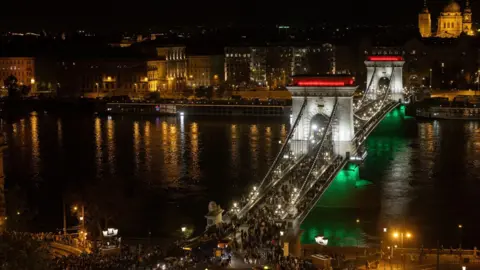
In Budapest, the iconic Chain Bridge, typically bustling with tourists, became a site of celebration as the colors of the Hungarian flag illuminated the night. This transformation followed the election results that saw the long-standing Prime Minister Viktor Orbán ousted after 16 years, with the Tisza party’s Péter Magyar taking charge.
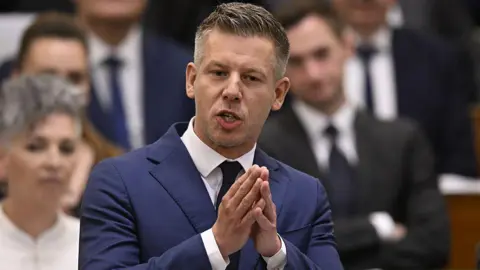
On the evening of this momentous vote, jubilant Hungarians filled the streets, reveling in what they described as a liberation from Orbán's regime. In his victory speech, Magyar declared, We did it, we brought down the Orbán regime - together we liberated Hungary! This sentiment resonated with the populace as they celebrated their newfound hope with chants and cheers of freedom.
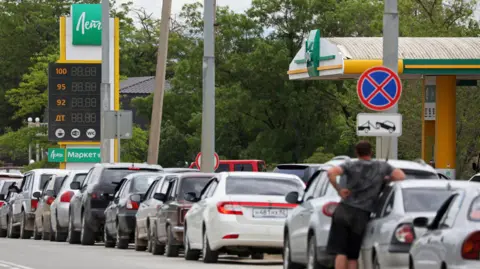
Despite Orbán's stronghold through state media and a robust electoral system favoring his party, his defeat is a testament to the people's desire for change. The harsh economic conditions, with rising inflation and living costs, have driven many traditional supporters away, paving the way for Magyar’s rise.
Budapest morphs into a canvas of optimism as thousands, particularly first-time voters, embrace the sense of change. Voter turnout reached record levels, signaling a shift in political engagement among the populace. One young voter expressed her emotional connection to the moment, stating, I cried when I voted, feeling a mix of disbelief and joy that we achieved this.
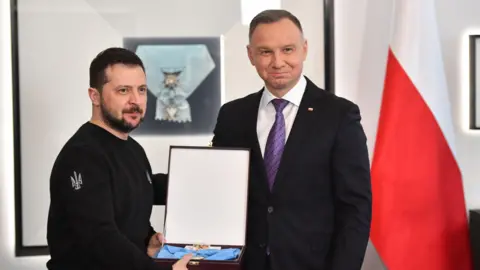
As the political landscape in Hungary shifts, significant changes in international relations are anticipated, including a reconsideration of ties with Russia, previously viewed as an ally under Orbán's administration. Leaders from across Europe, including Ukraine’s President Zelensky, have expressed eagerness to work alongside the incoming government. In contrast, Orbán's ties with Russia, characterized by delaying sanctions and opposition to assistance for Ukraine, pose a new challenge for Hungary's foreign policy under Magyar's leadership.
Magyar, having emerged from Orbán's Fidesz party, symbolizes a conservative shift that resonates with the Hungarian electorate while promising reforms to distance Hungary from its previously authoritarian leanings. The world watches as Hungary steps into this new chapter, balancing national priorities with an eye on reinvigorating its place within the European Union.
As his supporters glowed with excitement, Magyar concluded his address with a rallying cry for the future: Tonight we celebrate, tomorrow we get to work! With official confirmation of his prime ministership approaching, the real test lies ahead as he seeks to address the demands of his constituency and the expectations of a transformed Europe.