In brief
The ambiguity surrounding leadership in Iran is becoming increasingly pronounced following Mojtaba Khamenei's rise to supreme leader after the death of his father. With military actors gaining significant power and political authority appearing fragmented, the path forward for Iran remains uncertain in the face of external threats.
The question hanging over Tehran since the opening strikes of Iran's current war with the US and Israel is simple: Who is in charge?
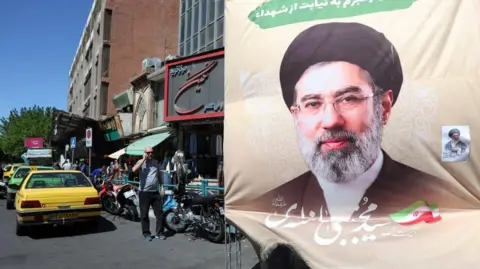
Formally, the answer is clear. Mojtaba Khamenei has assumed the role of supreme leader following the killing of his father, Ali Khamenei, on the first day of the war on 28 February. In the Islamic Republic's system, that position is meant to be decisive, having the final word on anything important including war, peace, and the state's strategic direction.
But in practice, the picture is far murkier. Donald Trump has described Iran's leadership as fractured, with the US waiting for Tehran to produce a unified proposal. On Thursday, Iran's leaders conveyed a message suggesting there was 'no such thing as a hardliner or moderate in Iran - just one nation, one course.'
Invisible Leader
Mojtaba Khamenei has not been seen in public since taking power, relying on a few written statements to communicate. Iranian officials have noted his injuries from initial strikes, raising concerns about his ability to lead effectively.
The absence of a visible authority complicates decision-making, creating a vacuum where coherence in direction is lacking. The military, particularly the Islamic Revolutionary Guard Corps (IRGC), has gained significant influence, moving autonomously without clear political oversight.
Diplomatic Channels Open but Weak
Diplomacy, formally led by Foreign Minister Abbas Araghchi and President Masoud Pezeshkian, appears to lack real strategy. The presence of Parliament Speaker Mohammad-Bagher Ghalibaf complicates matters further, as his role suggests power dynamics that deviate from traditional diplomatic channels.
Ghalibaf Steps Forward
Emerging from the chaos, Mohammad-Bagher Ghalibaf has become a visible figure, addressing public concerns and stepping into negotiations. Yet, resistance remains strong from hardliners, and Ghalibaf’s actions seem to lack the authoritative backing of Mojtaba Khamenei.
Claimed or Exercised Coherence
The current dynamics suggest that while the Islamic Republic is functioning, it lacks coherent direction. With the military holding key levers, negotiations remain fragile, and authority feels contested rather than unified.
This situation raises doubts about whether Iran’s system is merely claiming coherence or genuinely exercising it. As pressures mount, the reliance on clear signals from the leadership highlights the fragility of authority in Iran amid its ongoing conflicts.