Greece's Border Crisis: Migrants Recruited as Mercenaries for Pushbacks
Disturbing reports reveal Greek authorities have been utilizing masked migrants to carry out violent pushbacks against other migrants attempting to cross the border from Turkey. Allegations of brutality and human rights violations have surfaced amidst calls for accountability.
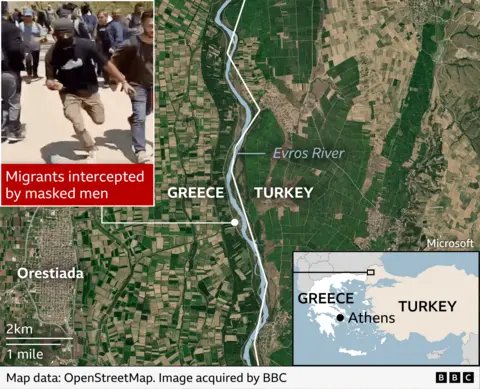
According to a recent investigation by the BBC, police in Greece are reportedly recruiting migrants to forcefully push back others across its land border with Turkey. Internal police documents suggest that this strategy, involving the use of so-called mercenaries, has been overseen by senior officers.
Witness accounts paint a harrowing picture of violence at the border, where migrants have faced beatings, theft of belongings, and even sexual assault. The Greek Prime Minister, Kyriakos Mitsotakis, has publicly stated that he was “totally unaware” of these practices.
Pushbacks, or the act of forcing migrants and asylum seekers back without due process, contravene international law. Previous reports have indicated that these actions have been attributed to undercover foreign masked men.
This situation has been exacerbated since a significant influx of migrants began entering Greece, predominantly through sea routes but also across the Evros River. The region serves as the outer edge of the European Union, and the border area is heavily militarized.
Greece has seen over one million migrant arrivals since 2015, a number that continues to rise. Internal police sources indicated that a significant number of people are pushed back weekly, leading to growing concerns about the human rights implications of these actions.
Notably, some migrants who have been coerced into becoming mercenaries claim they felt they had no other options due to the threats posed by law enforcement and their desperate circumstances.
The implications of these findings raise serious questions about the ethics and legality of Greece’s border control tactics in relation to the treatment of vulnerable populations.