In brief
In response to a recently detected crack on the high-speed line connecting Madrid and Barcelona, Spanish authorities have reduced the speed limit to 80 km/h for safety reasons. This comes in the wake of a tragic collision that left 45 dead, highlighting ongoing safety issues in the rail network.
Spanish rail authorities have temporarily reduced the speed limit on part of the high-speed line between Madrid and Barcelona after a fault was detected on the track.
Transport Minister Óscar Puente stated that a crack had been found on Sunday night in the line, 110km (68 miles) west of Barcelona, specifically between Alcover and l'Espluga de Francolí in the Catalonia region.
This measure follows a devastating high-speed collision that recently resulted in the deaths of 45 individuals in southern Spain, alongside significant disruption to local rail services in the northeast of the country.
Despite the discovery of the fault, the transport ministry assured that it did not pose a danger to trains currently traveling on that section. However, they will proceed at a reduced speed for the time being.
This latest adjustment adds to a series of speed reductions on high-speed rail lines implemented over recent days. The transport ministry revealed that the initially affected speed limit will be set at 80km/h (50mph) until further notice, significantly lower than the usual operation speed of 300 km/h on this heavily trafficked route.
In addition to this, certain sections of the Madrid-Valencia line will operate at reduced speed limits of 160km/h and 200km/h, as a precautionary measure.
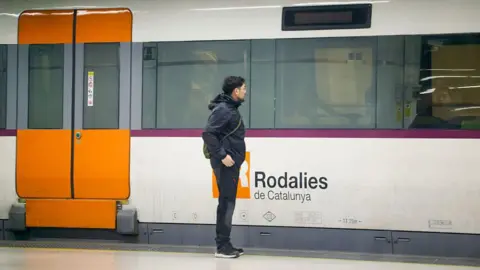
On a broader scale, local services like Rodalies in Catalonia are facing severe disruptions. Last week's safety incident, where a trainee driver was fatally injured after a train struck a collapsed wall, compounded existing issues, leading to demands from pilots for improvements in safety protocols.
Recent days have seen multiple incidents disrupt Rodalies service, with officials speculating that a cyberattack could be behind some of the chaos.
The Catalan Republican Left party criticized years of underinvestment in the Rodalies network, and the president of the Chamber of Commerce of Terrassa highlighted the reputational damage caused by the ongoing issues.
As investigations into the high-speed collision continue, with a focus on the critical track section that reportedly failed, pressure mounts for governmental accountability in railway safety, with calls for Minister Óscar Puente's resignation surfacing amid public discontent.