Hundreds of transport workers in the Philippines' capital Manila have gone on strike over rising fuel costs. Diesel and petrol prices have more than doubled since the Iran war broke out on 28 February - with the Philippines now in a state of national energy emergency.
One 62-year-old driver in Manila told the BBC the situation was getting increasingly desperate, saying he had no food to support his five children and had not received any cash aid from the government.
As the two-day strike started on Thursday a ship carrying more than 700,000 barrels of Russian crude oil arrived in the country. President Ferdinand Marcos' spokeswoman said the Sierra Leone-flagged Sara Sky arrived earlier this week with the crude shipment.
Marcos had promised to look for new sources of oil as the country had been relying on supplies that pass through the Strait of Hormuz for 98% of its requirements.
The transport coalitions leading the strike have laid out sweeping demands - from scrapping fuel taxes and rolling back oil prices, to abandoning deregulation and introducing state controls. They are also pushing for fare increases and higher wages.
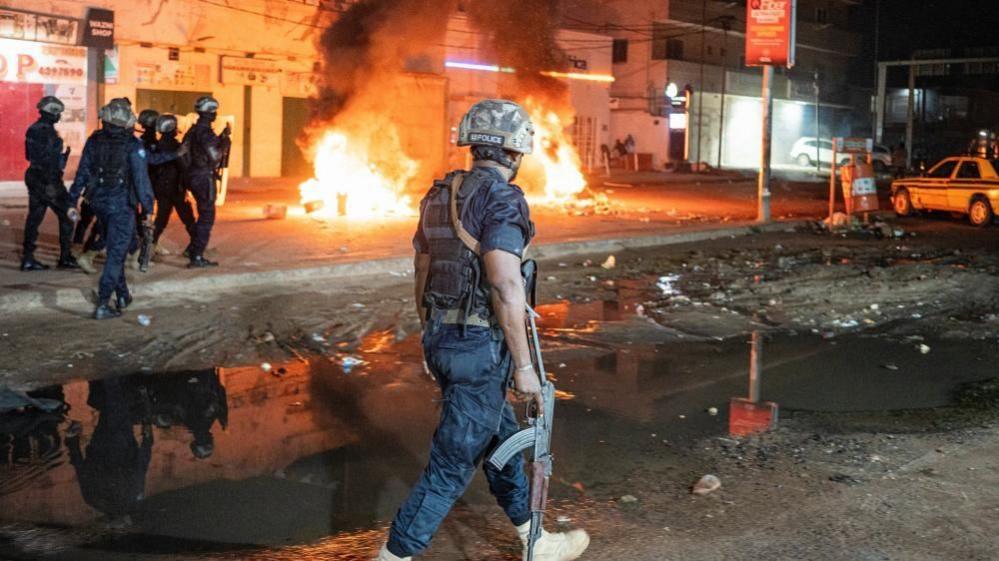
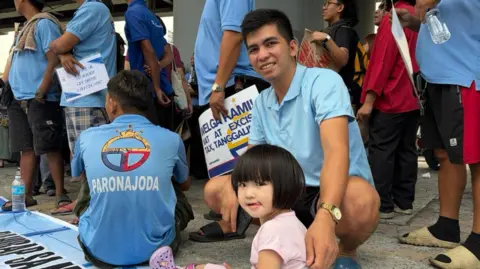
Groups of protesters gathered in different areas across the capital on Thursday morning, holding signs and calling for the government to do more to help. Many of them were drivers of jeepneys - mini-buses known for their cheap fares. Motorcycle and car ride-hailing drivers were also among those who earlier said they would join protests, according to local reports.
Some said they had not received the payout of 5,000 pesos ($83; £62) that the Department of Social Welfare and Development had said certain drivers would be eligible for.
I lined up for more than five hours yesterday for the cash aid from the government, but my name was not there, said 62-year-old Guillermo Japole, adding that he had received no cash aid, no earnings, no food for the family. Guillermo, whose five children are in school, says his family is on the edge of being evicted from their rental home.
Another driver, 28-year-old Anjo Lilac, similarly said he had not received any aid. He brought his daughter Hannah to the protest, explaining that with his wife temporarily working, no one would look after their child. He added that financial aid would help them with food, house rent, and necessities for their baby.
Some jeepney drivers told the BBC they might go back to their hometowns to look for other jobs. It feels like we are being choked. It's really tough. We don't know where can we get money to provide for our families, said Ronnie Rillosa, 58, who has been a jeepney driver for 30 years.
The effects of the planned two-day strike are already being felt by Manila's commuters, in one of Asia's most congested cities. Arnold Irinco, a 52-year-old liaison officer, was among those queuing for a free ride provided by the government. He expressed understanding of the protesters' plight, acknowledging their need to support their livelihoods.
Earlier on Wednesday, President Marcos signed a law allowing him to temporarily suspend or cut the excise tax on petroleum products when the average Dubai crude oil price exceeds $80 per barrel. However, not everyone is satisfied. The country's main labor coalition criticized the emergency declaration as an acknowledgment of the government's inability to handle the oil crisis. They expressed concerns about anti-worker provisions in the coast and the potential restrictions on strikes.