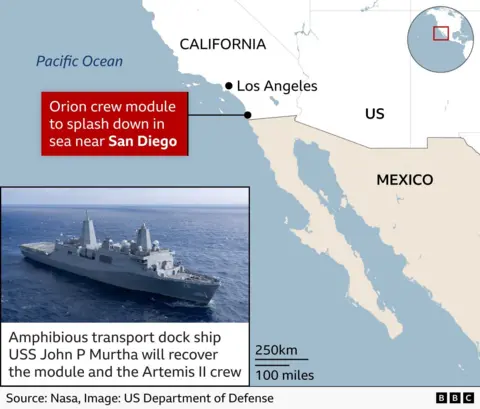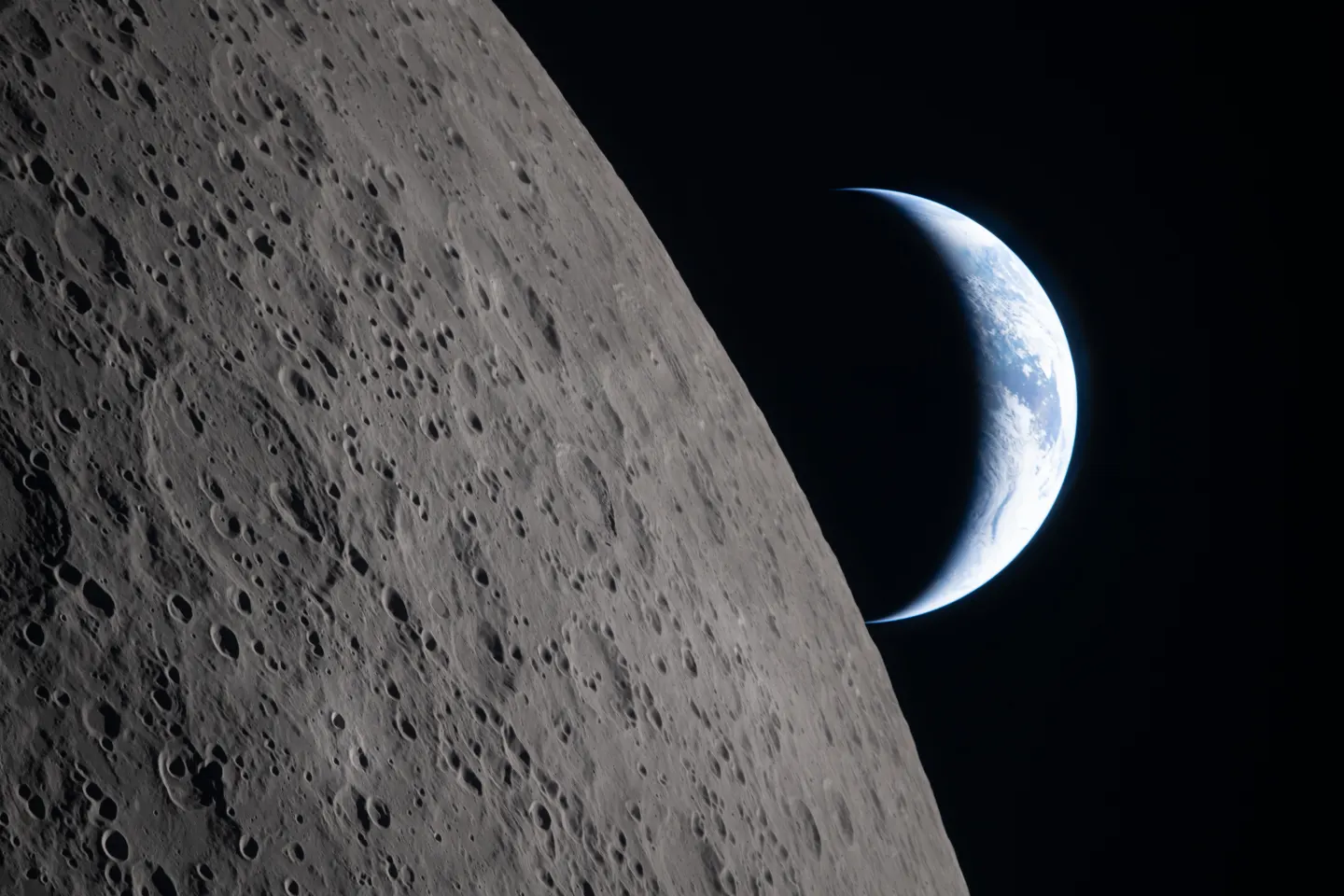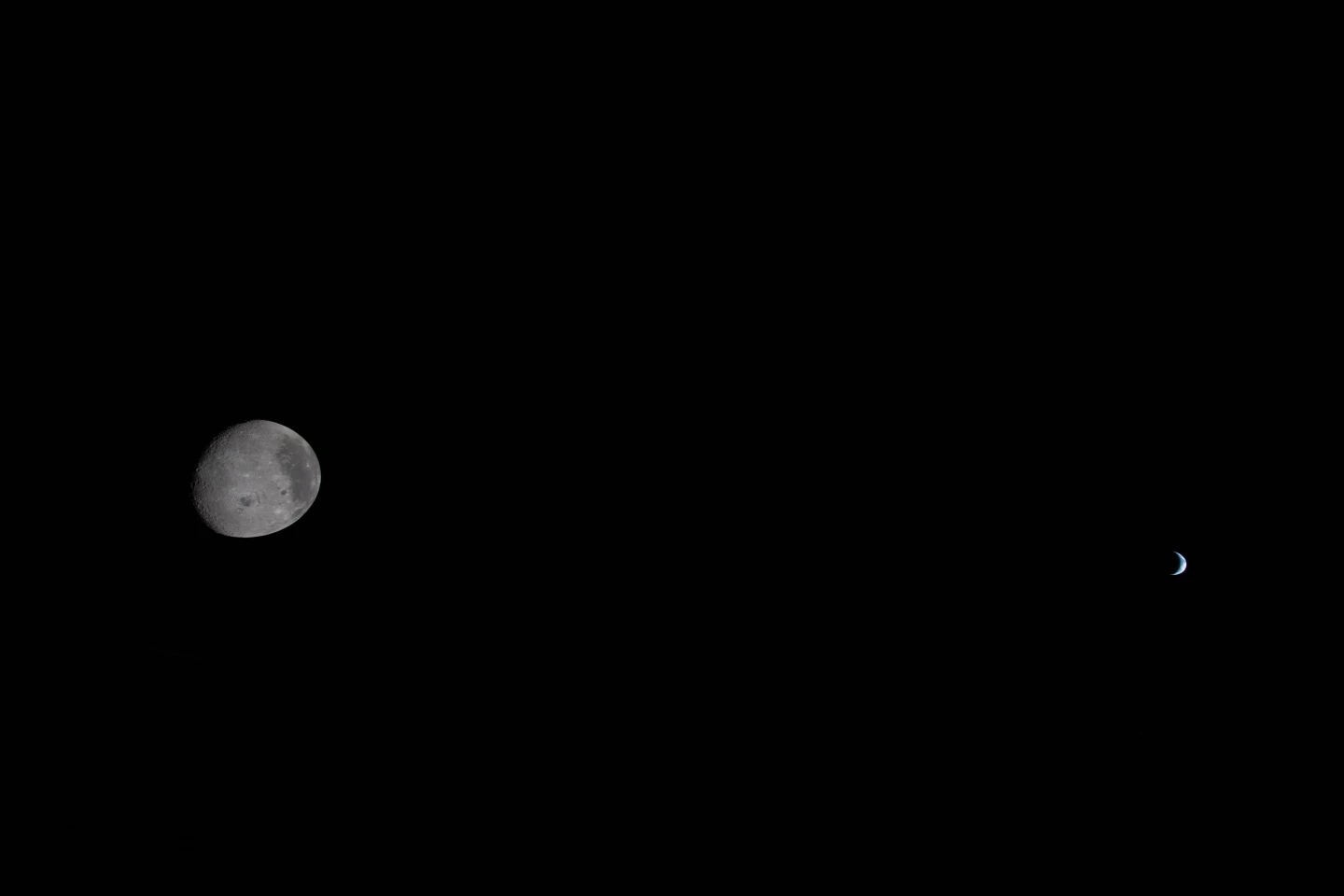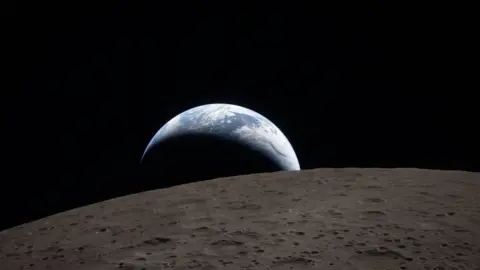
Nasa has released the first photographs taken by the Artemis II astronauts during their fly-by of the Moon.
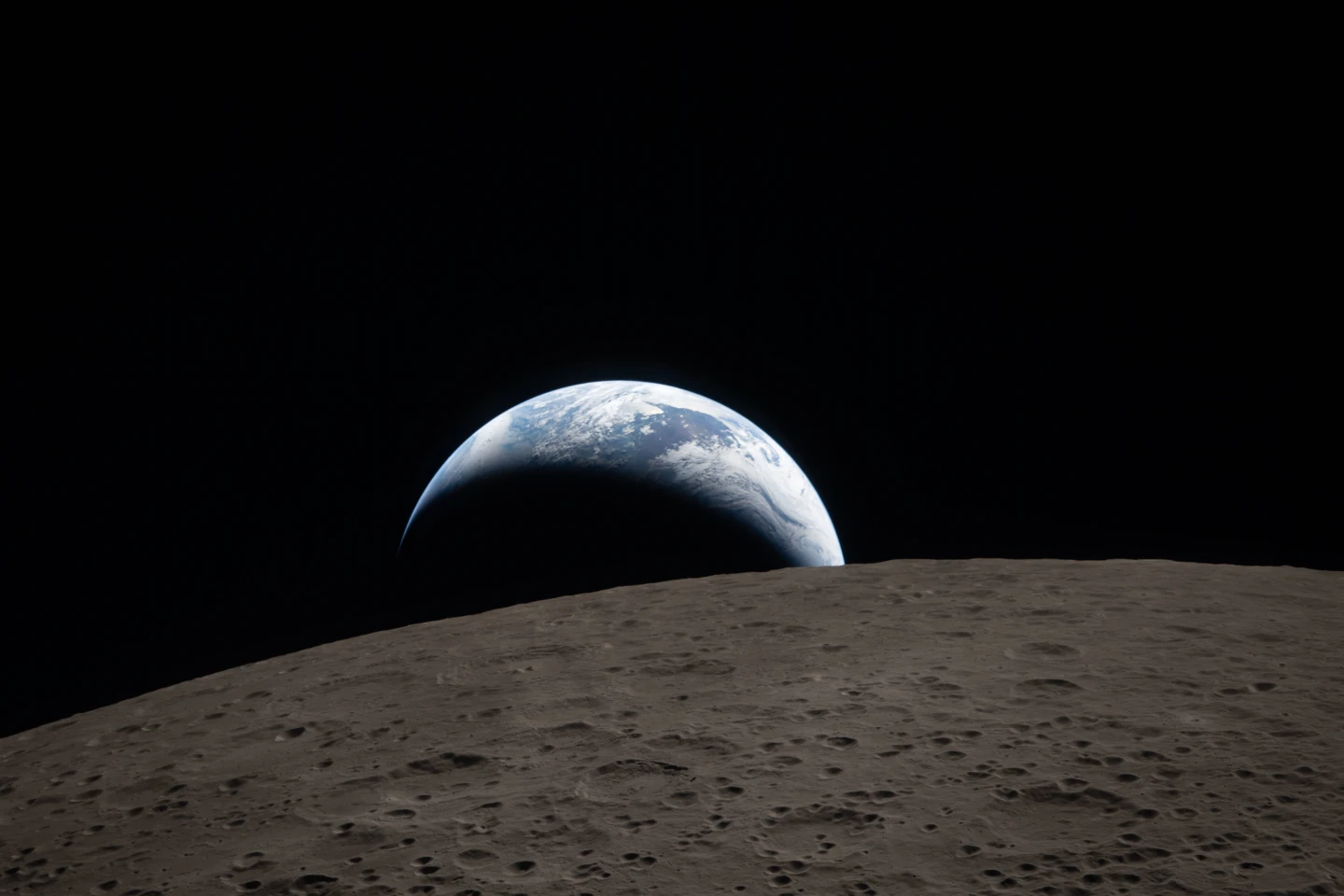
The first image shows an 'Earthset' as the astronauts glimpsed our home planet peaking out beyond a cratered lunar landscape.
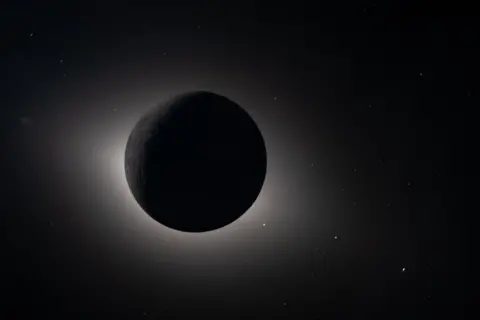
The second photograph shows the spectacular solar eclipse to which the astronauts were treated as the Moon blocked out the Sun.
Nasa did not say which of the astronauts, who are on their return journey to Earth after the fly-by, took the photographs.
The Earthset photo carried echoes of the famous Earthrise photograph taken by Bill Anders aboard Apollo 8 in 1968 in the moon fly-by that preceded the historic first human landing the following year.
The view of a vulnerable blue planet against the background of the depths of space is still seen as one of the most iconic environmental photographs ever taken.
The astronauts took the photos during a six-hour flyby, including a period of radio silence when their capsule was behind the Moon.
Nasa said in its description that the Earthrise photograph was captured through the Orion spacecraft window at 18:41 Eastern Daylight Time (2341 BST) on Monday.
'The dark portion of Earth is experiencing nighttime. On Earth's day side, swirling clouds are visible over the Australia and Oceania region,' Nasa said.
'In the foreground, Ohm crater has terraced edges and a flat floor interrupted by central peaks. Central peaks form in complex craters when the lunar surface, liquefied on impact, splashes upwards during the crater's formation.'
For the astronauts, seeing a lunar eclipse as the Moon blocked out the Sun was a highlight, even on this extraordinary trip.
Victor Glover described it as 'sci-fi' and 'unreal', also describing the view of the corona of the Sun.
'This continues to be unreal,' he said. 'The Sun has gone behind the Moon and the corona is still visible, and it's bright and creates a halo almost around the entire moon.'
'The Earth is so bright out there and the Moon is just hanging in front of us.'