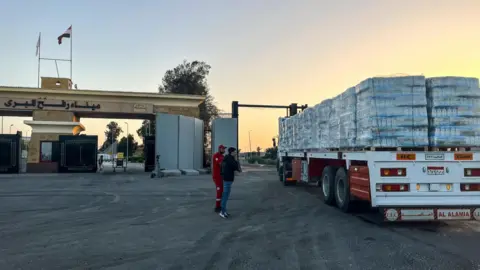
Israel has announced it will open the key Rafah crossing between Gaza and Egypt in the coming days to allow Palestinians to leave the territory.
Israeli military body Cogat stated that exits would be facilitated through co-ordination with Egypt, following security approval by Israel and under the supervision of the European Union mission. The process will mirror a previous arrangement seen in January when the crossing opened during a temporary ceasefire.
An Israeli security official noted this measure reflects Israel's support for the ongoing ceasefire with Hamas, which began seven weeks ago, while Egypt has denied any coordination regarding the crossing's reopening.
According to the State Information Service, an Egyptian official mentioned that if an agreement is established to open the crossing, it would permit movement in both directions, aligning with a previous peace plan proposed by former U.S. President Donald Trump.
The Rafah crossing has predominantly been shut since May 2024 when the Palestinian side was taken by Israeli forces. Prior to this, it was a vital exit for Palestinians during conflict periods and a primary entry point for humanitarian aid.
The World Health Organization reports over 16,500 severely ill or injured Palestinians urgently awaiting lifesaving medical evacuations, yet only a limited number have been permitted safe passage since the ceasefire commenced.
Israeli reports indicate that the Palestinian Authority will aid in managing the Rafah crossing's operations alongside the EU's Border Assistance Mission, although concerns persist about the sensitivity of PA's involvement due to Israeli leadership's stance against their participation in Gaza governance.
Reports also suggest that Israeli Prime Minister Benjamin Netanyahu delayed the crossing's reopening over the unresolved issue of deceased hostages; the crossing's operational timeline is closely tied to negotiations concerning held individuals.
With previous exchange initiatives resulting in releases and return of bodies between Israel and Hamas, the current crossing situation remains critical, tied to wider humanitarian needs amid an ongoing conflict.