Iranian strikes on military bases used by the US in the Middle East caused about $800 million (£600 million) in damage in the first two weeks of the war, a new analysis shows.
Much of the damage was incurred during retaliatory strikes by Iran in the week following the US and Israel's launch of the war, according to a report by the Center for Strategic & International Studies (CSIS) and an analysis by the BBC.
The total extent of the damages caused by Iranian strikes on US assets remains unclear, though the estimated $800 million in damage to military infrastructure offers a glimpse into the significant costs borne by the US as the conflict continues.
Mark Cancian, a senior adviser at CSIS and co-author of the study, commented that the damage to US bases has been underreported, and more information is required to determine the full scale of the destruction.
In response to inquiries, the US Department of Defense redirected queries to US Central Command, which has refrained from commenting.
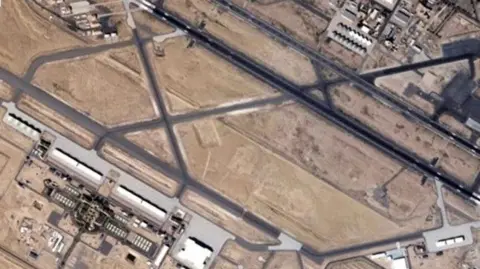
The retaliatory strikes targeted US air-defense and satellite-communication systems in regions including Jordan and the UAE, with a significant portion of damage arising from a strike on a radar for a Thaad missile defense system at a Jordanian air base.
This radar system alone costs approximately $485 million as noted by a CSIS review of defense budget documents. Additional estimates suggest that strikes caused around $310 million in damages to buildings and facilities on US military bases.
Iran has executed multiple strikes on at least three air bases, indicating a strategic effort to damage US military capabilities, with satellite imagery reflecting fresh damage over different phases of the conflict.
The US has also endured the loss of 13 military service members since the onset of the attacks, with the Human Rights Activists News Agency estimating a total death toll of nearly 3,200, including 1,400 civilians.
As the war continues, the financial strain has become evident with early estimates revealing costs surpassing $11.3 billion in the initial six days, prompting the Pentagon to request an additional $200 billion in funding.