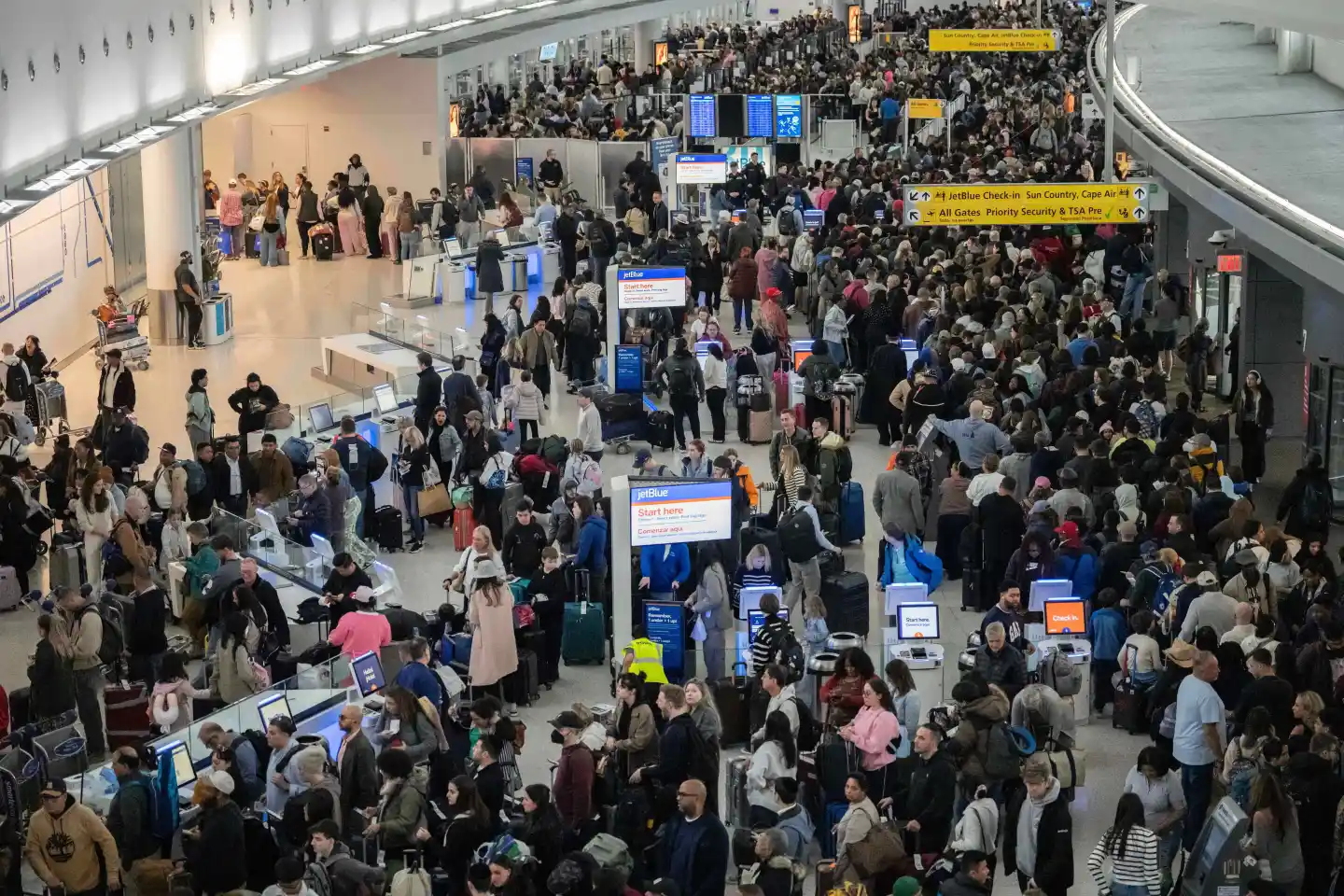
WASHINGTON (AP) — As part of an effort to alleviate long security lines caused by the government shutdown, President Donald Trump has ordered federal immigration agents to assist operations at U.S. airports. This initiative has prompted both support and concern among travelers and lawmakers alike.
The deployment of these immigration officers begins Monday, after Trump indicated that this strategy would continue unless a bipartisan agreement is reached to fund the Department of Homeland Security (DHS). With TSA workers facing delayed paychecks and travel frustrations mounting, the addition of immigration agents could help streamline airport security processes, particularly in high-traffic areas.
Tom Homan, the White House's border czar, detailed on news platforms the potential role of immigration agents at airports. He mentioned that their responsibilities might include monitoring exit points currently overseen by TSA, allowing TSA personnel to focus on screening passengers. Homan assured the public that a comprehensive operational plan is being finalized to address the urgent needs of airports experiencing extreme wait times.
Travelers already encountering problems at major airports expressed concerns about the execution of this plan. Reports of two-hour delays and chaotic scenes at screening checkpoints have raised fears among some that the introduction of immigration agents, lacking TSA training, may lead to further complications. Opponents of the deployment, including House Democratic leader Hakeem Jeffries, criticized the strategy, arguing that it endangers public safety.
As negotiations continue in Congress over the appropriations for DHS, many airport-goers are left wondering about the future of travel security and how the ongoing budget impasse will affect their journey. With uncertainty prevailing, travelers are advised to arrive at airports well in advance to navigate potential congestion.