In brief
A sweeping heatwave that left Spain, France and the UK in a sweat is now pushing eastward, threatening crowds of Germans, Czechs, and Italians with record temperatures and soaring humidity. France has moved its health alert to the highest tier as hospitals fill up and the nation mourns young and elderly casualties from the heat. Germany’s DWD warns 40°C may hit many western cities, while the Czech Republic has issued an extreme weather warning and rail operators urge passengers to postpone travel. Climate experts see this as a stark reminder of the European climate crisis, calling for urgent renewable expansion, forest protection and resilience building. With multiple nations displaying red and extreme red alerts, the continent’s infrastructure and health systems are under unprecedented strain.
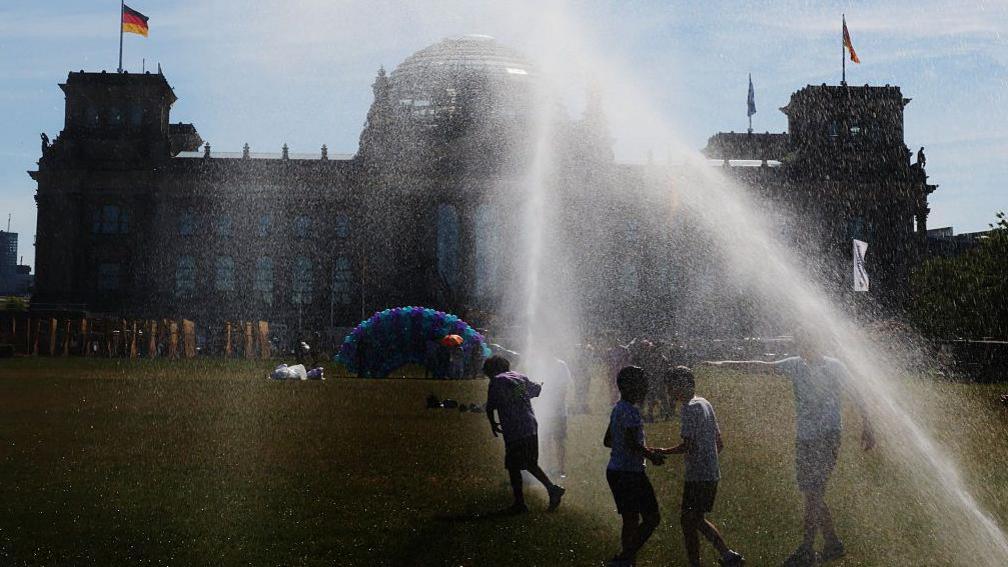
A continental heatwave, which first pummelled Spain, France and the UK, is now flaring across Germany and the Czech Republic, pushing some western and south‑western German cities toward 40 °C. The DWD meteorological service warned that heat stress is widespread, and forecasters predict a historic event for the region.
In France, Prime Minister Sébastien Lecornu has moved the national heat health alert to level three, the highest tier, to augment hospital staff and safeguard the most vulnerable. Health Minister Stéphanie Rist reports deaths among both young people and the elderly are spiking, underlining the tragedy that follows such extreme temperatures.
The United Nations’ climate chief Simon Stiell has linked this surge to the broader climate crisis, urging a “faster shift to renewables, protecting forests and boosting climate resilience.” These calls come as the EU’s Copernicus satellite imaging shows land surface temperatures soaring across France and northern Spain.
Paris’s mayor, Emmanuel Grégoire, warned that the city’s mortality rate is climbing while temperatures remain high. He urged residents to cancel strenuous outdoor work, stressing that “we must not believe ourselves to be invulnerable.” His remarks echoed the calendar for Bucharest and Lyon as they too brace for hot, dry days and potential thunderstorms later in the week.
The heatwave has already claimed lives across France: a three‑year‑old was found dead in a car, and several elderly patients, some over 60, have passed away in their homes in the Rennes region. In the Grand Duchy of Luxembourg, 38.3 °C was recorded, extending a red alert for “extreme thermal stress” until Saturday night.
Rail operators in Germany and the Czech Republic are offering free cancellations, urging passengers to postpone trips where possible as temperatures climb. In Italy, Florence’s Uffizi museum paused ticket sales until 28 June because its air‑conditioning system could not keep up with the 32 °C internal temperatures.
Historic highs recorded in France earlier this week—45.1 °C in southern Andújar—signal the extremes of the current cycle. Yet forecasters anticipate a cooler Atlantic influence soon, as the heat mass begins to retreat from Spain, providing a brief respite for a continent battling its fastest warming rate yet.