In brief
France’s latest heatwave has pushed the nation into a heated debate about air‑conditioning. With only a quarter of households equipped, the government faces calls from Marine Le Pen for a nationwide subsidy plan while environmentalists urge caution due to energy use. Meanwhile, the left’s Greens have begun to soften their stance, recognizing cooling as unavoidable under rising temperatures. New schools and hospitals discover the urgency, amid a broader push for climate‑safe infrastructure, while critics fear new policy could favour short‑term comfort over long‑term resilience.
Climate politics on fire in France
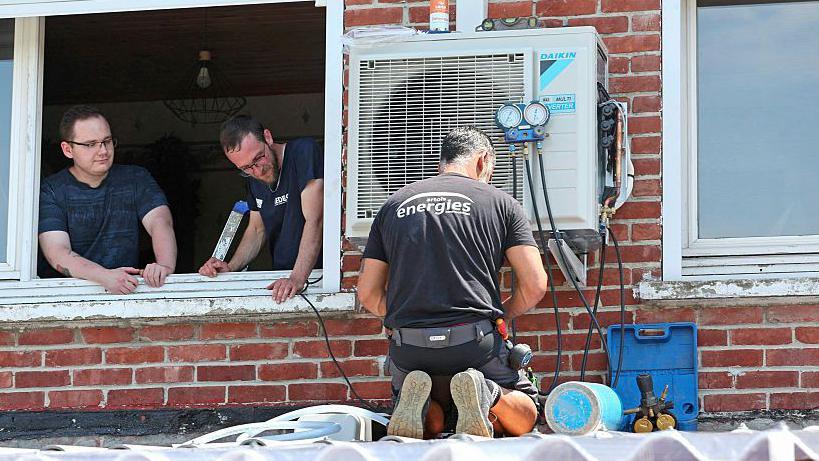
The country’s record 40°C heatwave has exposed a deep political divide over the use of air‑conditioning. Only a quarter of French homes, schools and hospitals have a working unit, a stark contrast to the 90% penetration seen in the United States and Japan.
Marine Le Pen has called for a national subsidy plan that would give interest‑free loans to households and public buildings, positioning the movement as a pragmatic approach to climate stress. Meanwhile, the Ecologists’ leader, Marie Tondelier, for the first time endorsed air‑conditioning for schools and hospitals, admitting that “the heat has made it unavoidable.”
Opponents highlight the energy cost of running compressors – even in a nuclear‑powered grid – and the risk of refrigerant leaks that serve as potent greenhouse gases. They argue that the solution lies in better insulation, green roofs and ventilation systems that reduce the need for mechanical cooling.
New‑build hospitals in Brittany will have air‑conditioning in only half of all rooms, sparking protests from medical unions who demand full coverage. In Paris, regional strongwoman Valérie Pécresse plans to equip all buses and trains with air‑conditioners by 2032, calling it “essential for modern transportation.”
The debate highlights a European trend where rising temperatures force governments to choose between immediate comfort and long‑term climate goals. As France battles soaring temperatures and a surge in heat‑related illnesses, pressure is mounting for a balanced policy that keeps people safe while limiting carbon footprints.
What the heat means for French citizens
Heat‑related hospital admissions have climbed, and teachers report that classrooms are becoming dangerously hot. Some school districts are resorting to portable fans and liquid‑cooling packs, but the solutions are temporary and costly.
The French government’s emergency alerts now warn of “exceptionally high heat” across the country, urging people to stay hydrated and avoid outdoor activities during peak hours.
With political leaders face‑to‑face on the issue, France may soon see a compromise that includes a mix of retrofitting programs and incentives for energy‑efficient units, ensuring that both environmental standards and public welfare rise together.