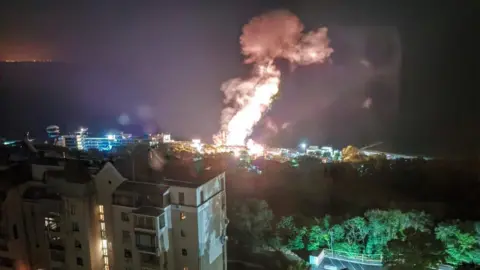
From Mariia's 16th-floor flat, the calm waters of the Black Sea stretch out into the horizon beneath the fading twilight.
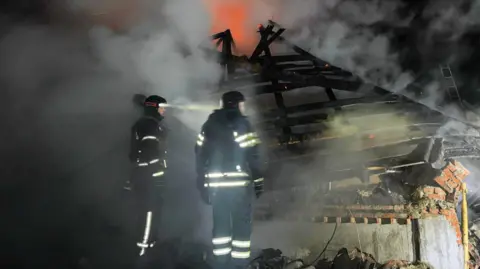
Up here you can see and hear when the drones come, she says, standing by a wall-length, floor-to-ceiling window. When they hit buildings and homes in the city of Odesa down below, we see all the fires too.
Her daughter Eva, who is nine, has learned the shapes and sounds of the objects that zoom through the sky on a daily basis. She proudly shows off a list of social media channels she checks when the air raid alerts go off.
She knows whether what's coming is a risk or a threat, and that calms her down, her father Sergii says.
There is scarcely a place in Ukraine that has not been targeted since Russia launched its full-scale invasion nearly four years ago.
But in recent weeks Odesa – Ukraine's third largest city – has come under sustained attack. Through strikes on port and energy infrastructure, Russia is trying to cripple the region's economy and dent the population's morale.
Moscow's drones, reminiscent of motorcycles, regularly crash into high-rise buildings, exploding on impact and blowing glass and debris inward, often with deadly consequences.
As the attacks surge, air sirens go off frequently, but not everyone heeds them. Recent air raids have heightened the sense of danger, especially as many families struggle to maintain normalcy in the midst of frequent power outages.
With the winter cold setting in, Odesa finds itself grappling with more than just military threats. Power cuts have plunged many into darkness, disrupting the basic comforts of life.
Despite the chaos around them, families, like Mariia's, remain steadfast in their hopes for safety and eventual peace, illustrating the resilience of Odesites in these tumultuous times.