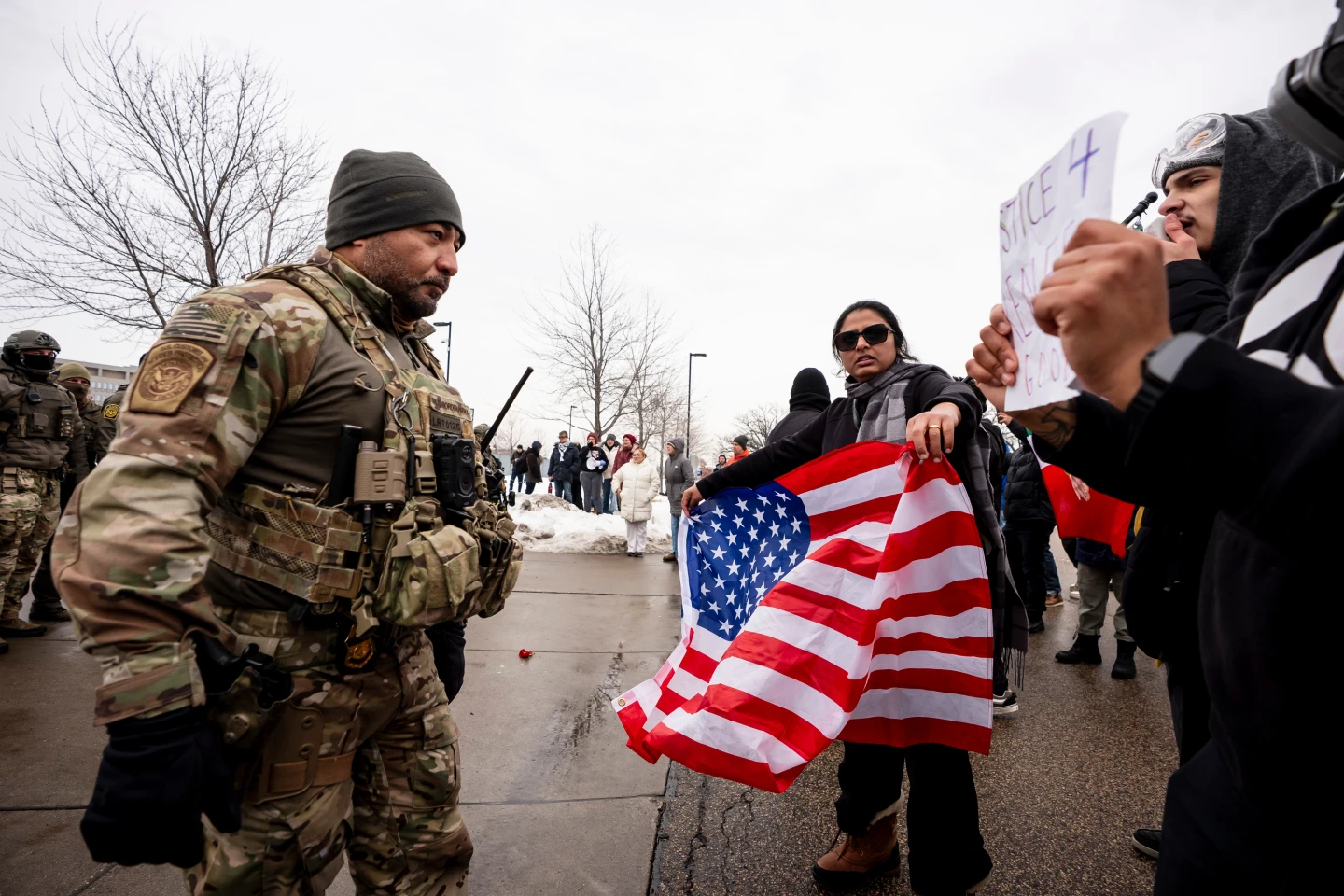
A day after a federal immigration officer fatally shot a woman in Minneapolis, the case escalated sharply Thursday when federal authorities blocked state investigators from accessing evidence and asserted that Minnesota has no jurisdiction to investigate the killing.
Legal experts asserted that the dispute highlights crucial questions arising from deploying federal agents into local areas for immigration enforcement, namely whether federal officers can be criminally charged under state law while performing federally authorized duties.
The FBI has informed Minnesota law enforcement that they will not participate in any investigation or access critical evidence regarding the shooting of 37-year-old Renee Good on Wednesday. Local prosecutors are currently evaluating their legal options while federal authorities seize control over the case.
Minnesota Governor Tim Walz has urged federal officials to reconsider their decision. He expressed concerns that initial statements from Secretary of Homeland Security Kristi Noem and other officials may jeopardize public confidence in the investigation's impartiality.
Experts have noted that successful state charges against federal officers are rare and often thwarted by claims of sovereign immunity under the Constitution’s Supremacy Clause. However, this immunity does not extend to all actions, particularly when excessive force may have been used.
Complexities of Legal Accountability
If state charges proceed, federal agents could invoke immunity, which is applicable only when their actions align legitimately with federal duties. This raises substantial evidentiary questions for state prosecutors attempting to navigate these legal frameworks.
As the investigation unfolds, Governor Walz has expressed frustration over the federal authorities rescinding a previous cooperation agreement with the Minnesota Bureau of Criminal Apprehension. He raised alarms about diminishing public trust in the investigation's integrity.
Amid these challenges, Minnesota Attorney General Keith Ellison stated that state officials could still pursue an independent investigation, despite warnings of potential obstructions concerning access to evidence.
Previous high-profile cases have centered on failures by officers to render medical assistance following fatal shootings, with promises of thorough reviews in similar situations. In this case, eyewitness accounts have raised questions about the immediate actions taken following Good's shooting, particularly the provision of medical aid.
As the community reacts, the ongoing tensions highlight the critical need for transparency in the investigation of excessive force incidents involving federal officers.