In brief
Open on Juneteenth, the Obama Presidential Center’s striking granite tower has become both a symbol of legacy and a flashpoint for neighborhood groups worried about displacement and historic preservation. The museum, designed by Tod Williams & Billie Tsien, features a glass‑enclosed sky room and a high‑rise that daringly contrasts with Chicago’s traditional brick aesthetic.
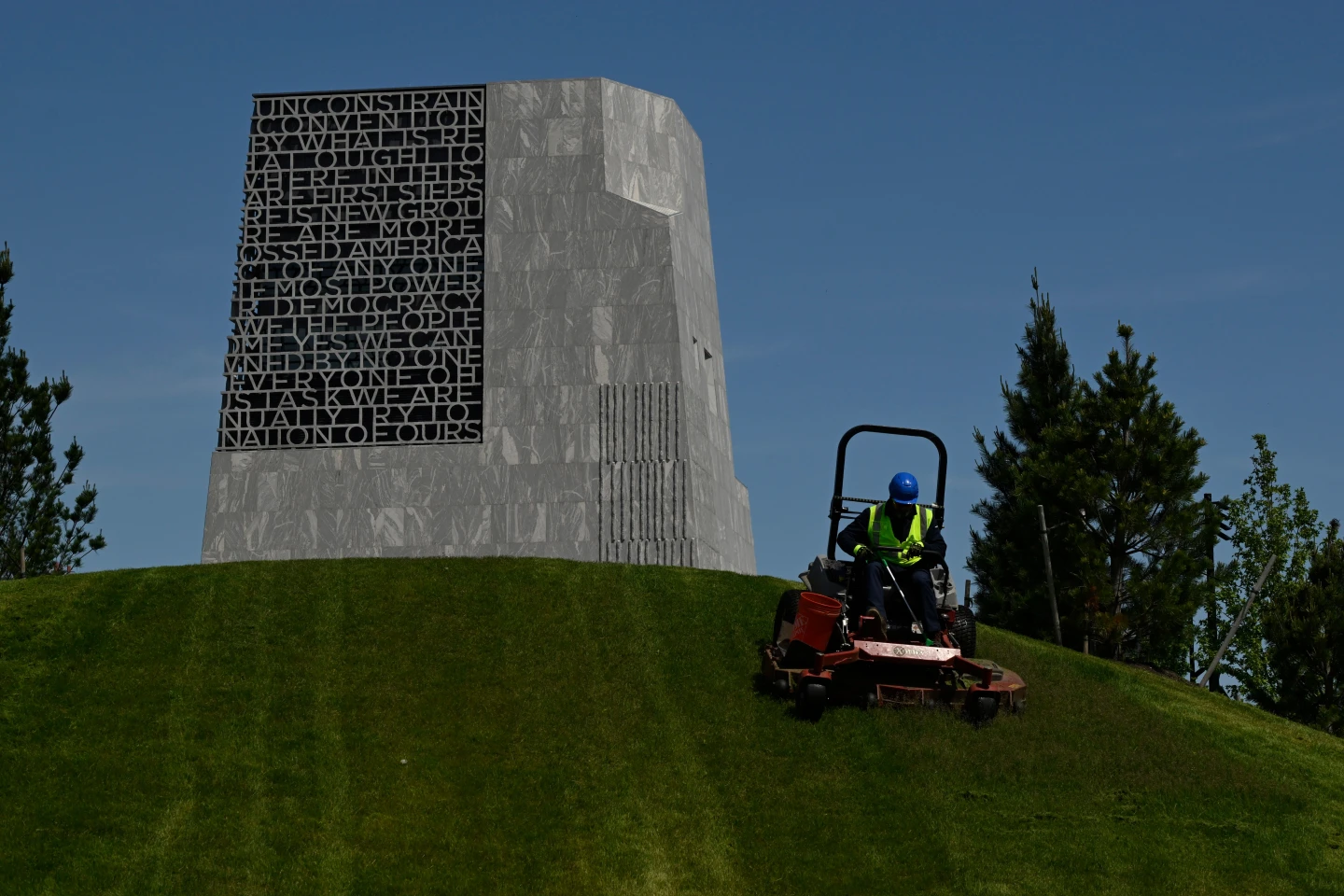
CHICAGO (AP) — A granite monolith crowns a leafy patch of the city’s South Side, its austere, nearly windowless facade seeming more like a sci‑fi set than the state‑of‑the‑art presidential museum it shelters. At 225 feet, the tower, the centerpiece of the Obama Presidential Center, pours a bold silhouette into Chicago’s skyline, a design choice that has divided a city that prides itself on architectural innovation.
Crews are finalising the finish on the $850 million campus, slated to open public‑face to the world on Juneteenth. The campus sits in a lakefront park traditionally reserved for classical, low‑rise buildings, making the tower’s presence feel jarring for some residents who recall a brown‑stone canvas of nearby housing. Others see the tower as a striking addition that will shape Chicago’s silhouette for decades.
Many locals have described the structure as a grain elevator, a “Star‑Wars” ship, or a mausoleum. But the design team insists the building’s low number of windows protects artifacts from sunlight, including a replica Oval Office. This design choice has drawn criticism from Chicago’s architectural critics, who see it as a departure from the city’s signature skyline of soaring glass and copper.
It doesn’t fit in at all, said Brenda Nelms, an advocate for Jackson Park’s residents who endure rising home values and protests against the park’s conversion. Nelms and similar groups argue the center erodes a historically Black neighborhood’s character. Lilly Stillfield, a local architect, suggested the building’s rigid mass distinct from typical Chicago design demonstrates the tension between memorialization and community preservation.
Since the site was selected in 2015, the project has sparked more than six lawsuits that challenged the park’s conversion and the tower’s height. Courts initially blocked construction but were later overturned. Community groups now demand housing protections and community benefits, citing concerns over displacement of low‑income families.
Architectural historian Edward Keegan, writing for the Chicago Tribune, called the tower an un‑Chicago building because of its low roofline and windowless façade. He acknowledged, however, that the tower offers a unique perspective: a sky‑room that offers north‑facing urban vistas rarely available in Chicago’s microclimate.
The tower’s design draws from a symbolic motif. Inside the facade, the base is wrapped in concrete letters that echo Barack Obama’s 2015 speech commemorating the 50th anniversary of the Selma‑to‑Montgomery march. The message—You are America—is literally etched onto the building’s stone.
Critics like Lee Bey of the Chicago Sun‑Times have called the Carnegie‑esque campus a spectator sport—fans of the city’s architecture scrutinise each new design. In their opinion, the tower is more of a sporting event than a building, one that incites debate around every architectural form. The design’s historical significance is also evident in its spacious campus that includes a public library, playground, basketball court, and gardens that blend seamlessly with the surrounding park.
While many community organisations stress the need for more protective ordinances, the Obama Foundation argues that the increased walkable area and community facilities outweigh the park’s loss. Foundation CEO Valerie Jarrett highlighted the museum as a space for public engagement, inviting visitors from all‑across the world to experience the building’s high‑rise and design.
A visitor who learns that the tower was specifically designed to echo public service will feel it like a love letter to the city, Jarrett said. It is a symbol of democracy for the people of Chicago and the United States.
As the federal and judicial systems play out the building’s future, future‑urban planners will have to reconcile the city’s need to preserve its architectural heritage with the promise of transformative public spaces. While the tower’s significance is undeniable, the questions about park land trade‑offs carry a bittersweet-nature as the city views its glass‑sunlit skyline.