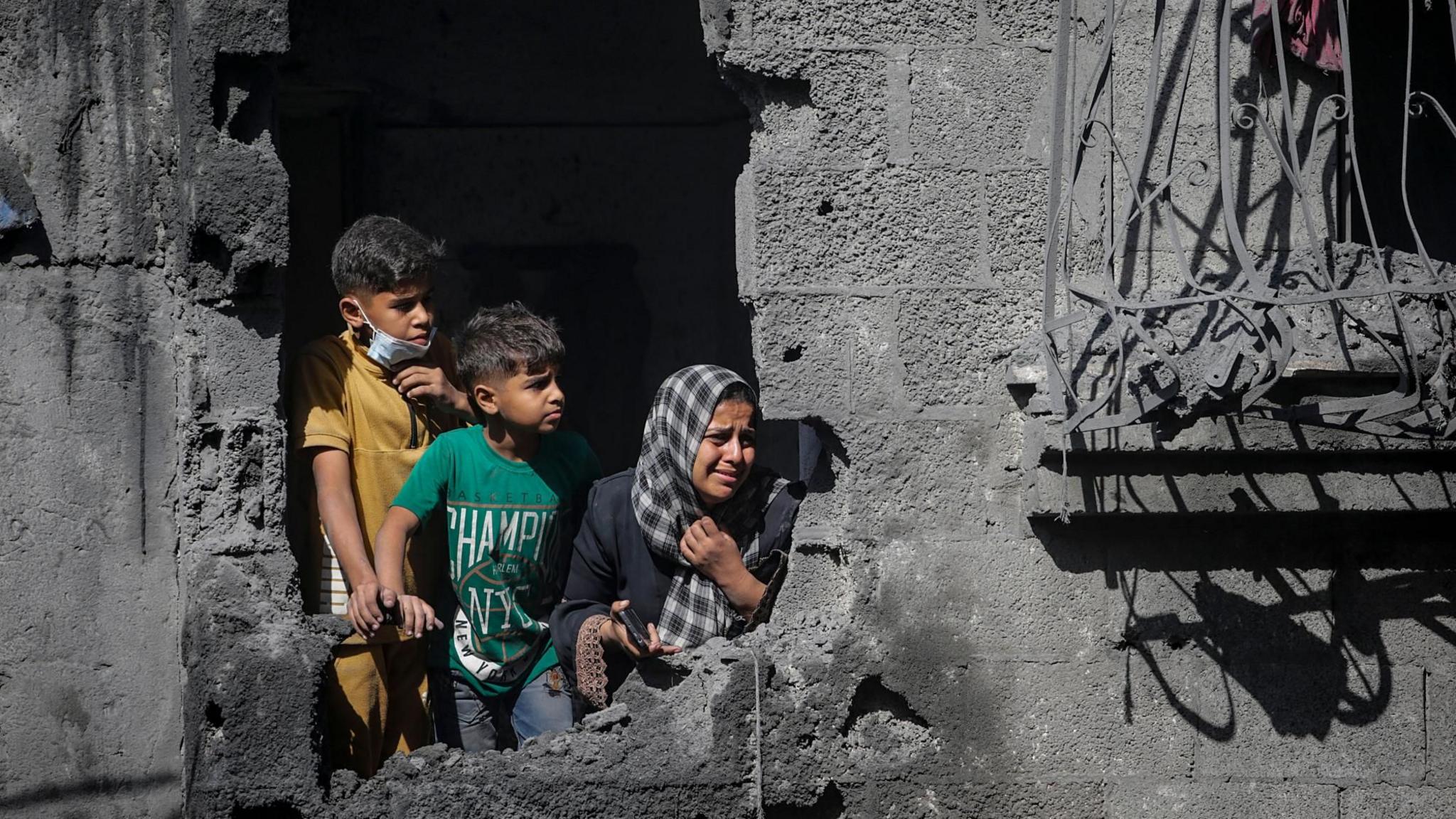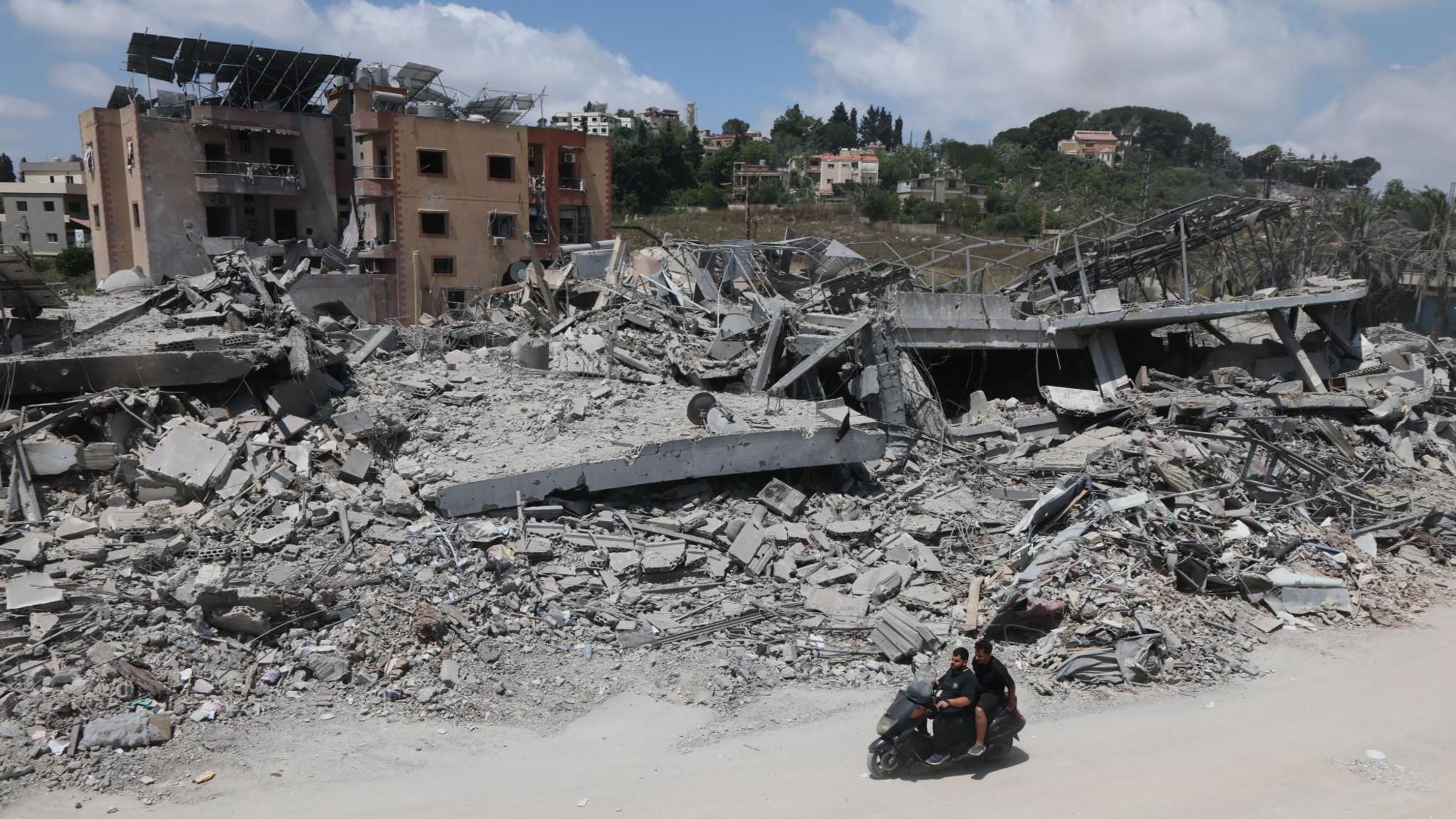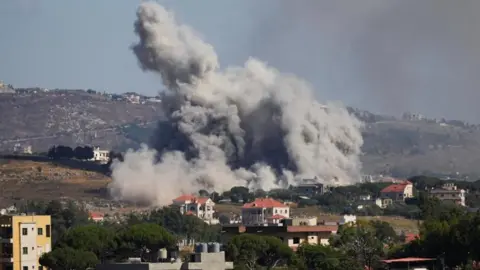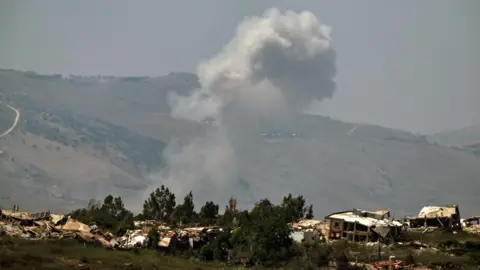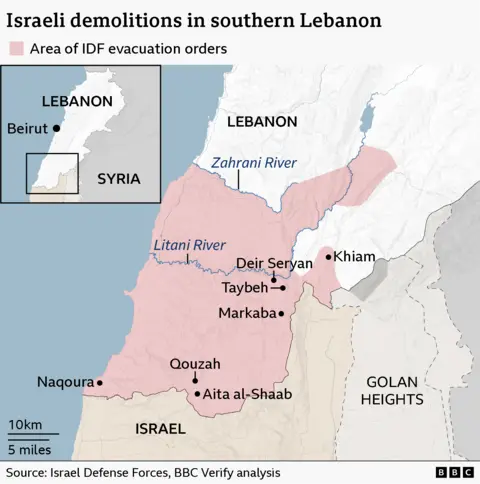
Towns and villages in southern Lebanon are being levelled by Israeli demolitions, satellite images and videos obtained by BBC Verify reveal.
BBC Verify analysis found more than 1,400 buildings had been destroyed since 2 March based on verified visual evidence.
This is just a snapshot of the overall damage caused by Israeli air strikes and demolitions, because of limited access on the ground and available satellite imagery. The true scale is likely to be much higher.
Israel's levelling of these structures comes after Defence Minister Israel Katz's order on 22 March to accelerate the destruction of Lebanese homes near the Israeli border based on the model in Gaza as part of its campaign against Hezbollah.
The systematic demolition of these towns and villages may amount to a war crime, international law experts told BBC Verify.
The Israel Defense Forces (IDF) said that it operates in accordance with the Law of Armed Conflict and does not allow the destruction of property unless there is an imperative military necessity.
It added, without providing evidence, that Hezbollah has embedded military infrastructure within civilian areas in the region.
On 2 March the Iranian-backed armed group Hezbollah launched rockets and drones into Israel in retaliation for the killing of Iran's supreme leader at the start of the war with Israel and the US.
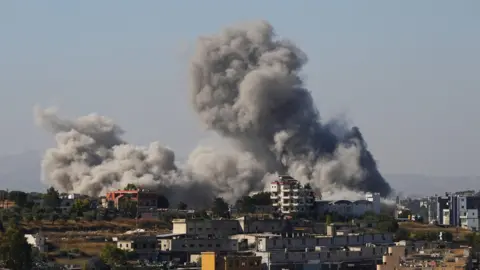
The IDF responded with a wave of strikes across Lebanon, targeting what it said was Hezbollah infrastructure, and launched a ground invasion of southern Lebanon.
More than 1.2 million people are estimated to have been displaced across Lebanon, including 820,000 from the south, according to figures by the UN Office for the Co-ordination of Humanitarian Affairs (OCHA).
The deliberate demolition of structures is not a new Israeli military tactic. It has been deployed across swathes of Gaza during the war that was triggered by the Hamas-led attack on Israel on 7 October 2023.
Legal experts also state that the destruction of property is strictly prohibited by international humanitarian law unless it is demanded by military necessity, emphasizing that the wholesale destruction of villages raises serious legal and ethical questions.