In brief
Iain Douglas-Hamilton, a pioneering figure in elephant conservation, passed away at his home in Nairobi at the age of 83. His extensive research into elephant behavior and the impact of poaching helped catalyze international bans on ivory trade. His legacy includes founding 'Save the Elephants' and inspiring conservationists worldwide, with tributes pouring in from notable figures including Prince William.
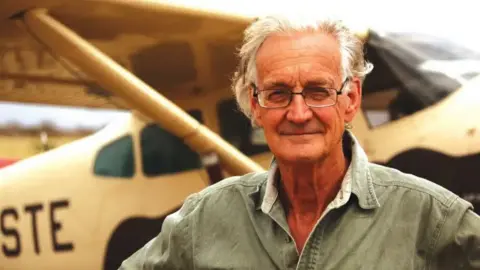
The Prince of Wales has paid tribute to pioneering elephant conservationist Iain Douglas-Hamilton, who died aged 83 at his home in Nairobi on Monday.
Douglas-Hamilton spent his life studying and campaigning to protect African elephants, becoming a world-leading expert on their behaviour in the wild.
His groundbreaking research exposed the devastating effects of poaching - often at great risk to his own safety - and was instrumental in the banning of the international ivory trade.
Prince William praised the zoologist as a man who dedicated his life to conservation and whose life's work leaves lasting impact on our appreciation for, and understanding of, elephants.
The memories of spending time in Africa with him will remain with me forever, added Prince William, who is a royal patron for the African wildlife conservation charity, Tusk, of which Douglas-Hamilton was an ambassador.
The world has lost a true conservation legend today, but his extraordinary legacy will continue, the charity's founder Charles Mayhew said in a statement.
Born in 1942 to an aristocratic British family in Dorset, England, Douglas-Hamilton studied biology and zoology in Scotland and Oxford before moving to Tanzania to research elephant social behaviour.
He began documenting every elephant he encountered in Lake Manyara National Park, eventually able to recognize them by their unique physical features.
Conservationist and friend Jane Goodall recognized his work in a documentary, emphasizing his role in demonstrating elephants' emotional complexities.
Douglas-Hamilton faced numerous dangers, including threats from poachers and elephants, but remained committed to elephant conservation, founding Save the Elephants in 1993 to further these efforts.
His legacy leaves a profound impact on global conservation efforts, highlighting the urgent need for human-elephant coexistence.
Iain Douglas-Hamilton is survived by his wife Oria, children Saba and Dudu, and six grandchildren.