The ants are flying in Kenya at the moment. During this rainy season, swarms can be seen leaving the thousands of anthills in and around Gilgil, a quiet agricultural town in Kenya's Rift Valley that has emerged as the centre of a booming illegal trade.
The mating ritual sees winged males leave the nest to impregnate queens, who also take flight at this time. This makes it the perfect time to chase down queen ants to sell on to smugglers who are at the heart of a growing global black market, that taps into the pet craze for keeping ants in transparent enclosures designed to observe the insects as they busily build a colony.
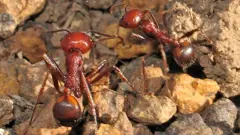
It is the giant African harvester ant queens, which are large and coloured red, that are most prized by international ant collectors – one can fetch up to £170 ($220) on the black market, which tends to operate online.
A single fertilised queen is able to create a whole colony and can live for decades – and can be easily posted as scanners do not tend to detect organic material.
With the cost sometimes reaching as high as $220, these prized queens have stimulated a surprising illicit market. As the former broker noted, many went into collecting without knowing the ramifications of their actions.
The illicit trade became startlingly clear last year when 5,000 giant harvester ant queens were seized alive at a guest house in Naivasha, indicating a much larger web of trafficking than previously understood.
Conservationists now fear that the increase in illegal harvesting could threaten not only the species but local ecosystems, as harvester ants play a crucial role as keystone species, aiding in seed dispersal and maintaining the health of grasslands.
Experts are calling for stronger regulations and monitoring of ant collection in the region, emphasizing that while the trade may seem innocuous, the consequences could be severe for both the ants and the environment.