In brief
Under a new trade agreement, Australia will significantly increase its beef exports to the European Union as tariffs on agricultural products are slashed. The deal, valued at approximately A$10 billion, also addresses food naming rights sensitive to both nations, while aiming to foster a robust economic relationship and enhancing cooperation in security and defense.
More Australian beef will be served on the dining tables of Europe under a new free trade deal with the European Union that cuts most export tariffs on Australian products.
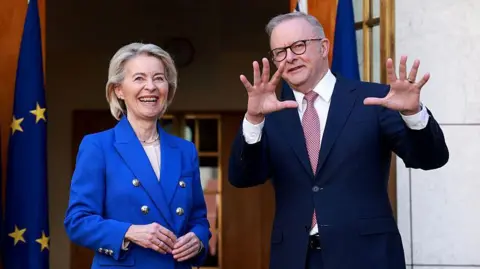
The deal, worth about A$10bn ($7bn; £5.2bn) was inked on Tuesday with Australia's prime minister and the head of the European Commission describing it as a mutual win-win.
The deal means Italian-style sparkling wine made in Australia can still be sold as prosecco domestically though the name will be phased out over 10 years for exports.
Australian producers can also continue to use names including parmesan though feta will be subject to grandfathering and lengthy phase-out periods due to strict EU rules on naming rights.
Under the deal, eight years in the making, almost all EU tariffs will be lifted on Australian agricultural products such as wine, fruit and vegetables, olive oil, seafood, most dairy products and wheat and barley.
This will mean a saving of about A$37m for local wine producers and exporters, the government said.
For Australian consumers, the deal will mean cheaper European wine, spirits, biscuits, chocolates and pasta.
The issue of food naming rights is sensitive in both Europe and Australia and Australia is now the only country outside of Italy to have secured EU permission to use the name prosecco.
Referring to the matter, Australian Prime Minister Anthony Albanese noted the country's modern history was built on migrants.
European Commission President Ursula von der Leyen said Australia and the EU had a unique relationship that was built for the long term.
The trade agreement was a perfect balance, she said, as it will be easier for Australians to export to the EU while more EU-made goods will be available in Australia.
However, Andrew McDonald from Meat and Livestock Australia indicated that the deal on meat exports fell short of expectations, allowing for only about 30,000 tonnes of beef exports, compared to the 50,000 tonnes farmers sought.
Australia and the EU also signed a new security and defence partnership aimed at strengthening cooperation in defence, counter-terrorism, space, and maritime security.
Von der Leyen emphasized the importance of building collective resilience in a rapidly changing world, noting that trust matters more than transactions.
She also announced new collaborations on critical minerals projects, including lithium and tungsten, alongside praising Australia's progressive social media policies aimed at protecting users under 16 years old.