A bitter dispute pitting Hungary and Slovakia against Ukraine is holding up a crucial €90bn (£77.95bn) EU loan to Ukraine.
No oil has flowed through the Druzhba (Friendship) pipeline, from Russia to Hungary and Slovakia across Ukraine, since the major oil hub at Brody, in western Ukraine, was damaged in a Russian attack on 27 January.
While Ukraine argues that it will need six more weeks to repair the damage and restore the oil flow, Budapest accuses Kyiv of stalling, as revenge for Hungary's pro-Russian and anti-Ukrainian position.
The dispute underlines the ability of one or two countries to block EU decision making. It also shows Hungary and Slovakia facing fuel problems, because they refused to follow the lead of others and wean themselves off Russian oil since 2022.
The Brody pumping station in Ukraine's western Lviv region is crucially important for the transit of Russian oil to Hungary and Slovakia.
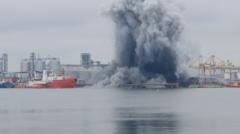
Satellite images obtained by the BBC suggest that the Russian strike on 27 January damaged its key part - a huge tank used to store oil necessary to keep the pipeline pressurised and functioning.
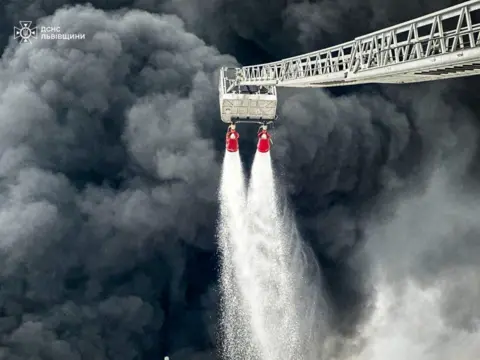
The photos appear to show the tank smouldering after the attack and suggest that a fire raged there for days. This is the biggest oil tank in Ukraine, with a capacity of 75,000 cu.m.
Ukrainian energy expert Henadiy Ryabtsev says damage caused to the pumping station at Brody is severe and is possibly not just limited to the oil tank, impacted by extreme heat resulting from the fire..
The oil was on fire for about a week, which means that during that time everything around it was affected by the high temperature, he told the BBC.
The government in Kyiv says the damage caused to Brody is severe and Ukraine does not have the resources to repair it more quickly. Ukrainian Foreign Ministry spokesman Heorhy Tykhy stated that Our infrastructure is being damaged every day... Ukraine repairs all of that, but we do not have unlimited resources.
Meanwhile, the EU has offered Ukraine technical support and funding to speed up repairs. President Volodymyr Zelensky had earlier signalled reluctance to repair the pipeline, stating he wouldn't restore it because it's Russian oil.
Hungarian Prime Minister Viktor Orban has accused Ukraine of delaying the restoration of the oil flow through the pipeline for political reasons while maintaining strong ties with Moscow. The Hungarian government claims that the pipeline remains intact, relying on arguments from the CEO of the Hungarian energy company MOL, Zsolt Hernadi.
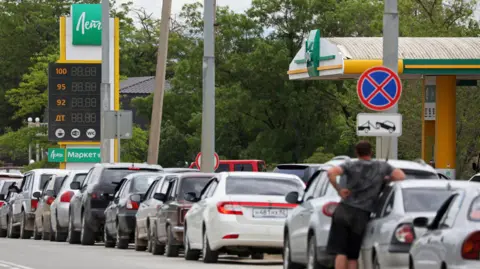
As the dispute continues, Hungary has begun receiving non-Russian crude through the Adria pipeline from Croatia, although its refiners lack the equipment needed to process it.