In a surprising twist of strategy for his 2024 presidential campaign, Donald Trump is reaching out to former friends and associates from the World Wrestling Entertainment (WWE) universe. Though it has been over a decade since Trump's last televised WWE appearance, wrestlers are now rallying behind him as he vies for a second term.
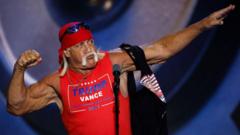
This past summer at the Republican National Convention, iconic wrestler Hulk Hogan, known for his larger-than-life persona, excitedly endorsed Trump by tearing off his shirt to reveal a Trump-branded tank top. "Let Trumpamania run wild, brother!" he shouted, embracing the nostalgia of wrestling's heyday while drawing attention to Trump's candidacy.
In a recent sit-down with Tyrus, a wrestler turned media figure, Trump voiced his concerns over societal issues, claiming that "manhood is under attack" and expressing discontent with perceived mockery against religion in America. The visual presence of wrestling stars continues to generate buzz on social media, amplifying Trump's unconventional campaign style.
On Monday, Trump appeared on a podcast hosted by Mark Calaway, famously known as The Undertaker, where accolades were exchanged. Calaway remarked, "You’ve made politics fun again," to which Trump enthusiastically agreed, seeking to position his brand of politics as entertaining and engaging.
Experts suggest this tactic reflects a growing trend where American voters often pay attention to politics only during the final phases of an election, potentially making Trump's wrestling connections resonate with apolitical audiences. Freelance journalist Abraham Josephine Riesman pointed out that wrestling podcasts attract listeners who may identify as unorthodox in their political views.
Trump's camp is also targeting young men, utilizing podcasts and social media as tools to boost engagement. Senior communications adviser Alex Bruesewitz articulated a strategy that capitalizes on Trump’s celebrity status and cultural relevance, thus creating an increasingly engaged voter base.
Historical parallels play a significant role in understanding Trump's journey. He forged his WWE ties long before entering the political arena, transforming his businessman persona into a celebrity admired by the wrestling community and its fans. The dynamic between Trump's political career and WWE's evolution under Vince McMahon showcases their mutual rise, clouded by scrutiny and controversy.
Their relationship was underscored in the late 1980s when Trump hosted WrestleMania events, eventually culminating in a high-profile storyline rivalry in 2007 that captivated audiences. With WrestleMania 23's "Battle of the Billionaires" generating record pay-per-view buys, Trump's early exposure to large crowds afforded him unique experience in captivating the public.
Despite currently surfacing once more in the wrestling sphere, not all WWE personalities are backing Trump. Former wrestler Dave Bautista publicly criticized him as "a weak, tubby toddler," reflecting a divide within the wrestling community. Even with opposition, efforts to harness the power of recognizable wrestling figures could carve new paths in Trump's unabashedly untraditional campaign.
As Trump continues to navigate this vibrant, chaotic landscape, he is embodying the theatrics of both professional wrestling and modern-day politics, a strategy that has intrigued observers both within and outside the political realm.