In brief
During a phone call, Xi Jinping expressed to Donald Trump the significance of Taiwan in the context of U.S.-China relations, urging caution on arms supplies to the island. Trump described the conversation as thorough, and discussions also included topics like soybean trade and global security matters. The dialogue reflects an effort to manage tensions amid recent developments and diplomatic engagements between China and Western nations.
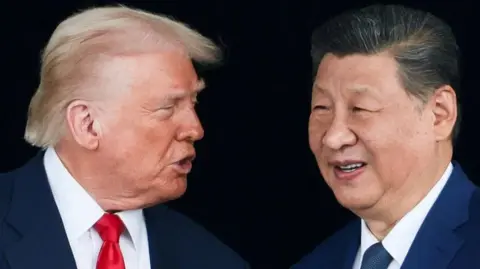
China's leader Xi Jinping has called Taiwan the most important issue in China-U.S. relations during a phone call with U.S. President Donald Trump.
Xi told Trump to be prudent when supplying weapons to the island, state media report, adding that he attached great importance to ties with Washington and hoped both sides would find ways to resolve their differences.
Trump described Wednesday's call as excellent and long and thorough.
The call followed a flurry of visits by Western leaders, including the UK's Prime Minister Sir Keir Starmer, to China in recent months, hoping to reset relations with the world's second-largest economy.
Trump himself is due to visit China in April, a trip he said he very much looked forward to.
He added that Beijing was considering buying 20 million tonnes of U.S. soybeans, up from the current 12 million tonnes.
The relationship with China, and my personal relationship with President Xi, is an extremely good one, and we both realize how important it is to keep it that way, he wrote in a Truth Social post.
Apart from Taiwan and soybeans, Trump and Xi discussed Russia's war in Ukraine, the current situation in Iran, and China's purchase of oil and gas from the U.S., the U.S. president wrote.
On Taiwan, Xi said the self-governed island was China's territory and that Beijing must safeguard [Taiwan's] sovereignty and territorial integrity.
The United States must handle the issue of arms sales to Taiwan with prudence, he warned.
China has long vowed to reunify with Taiwan and has not ruled out the use of force to do so.
The U.S. has formal ties with Beijing rather than Taiwan and has walked a tight diplomatic rope for decades. But it remains a powerful ally of Taiwan and is the island's biggest arms supplier.
In December, the Trump administration announced a huge arms sale worth around $11bn (£8.2bn) to Taiwan, which included advanced rocket launchers, self-propelled howitzers and a variety of missiles.
Beijing said at the time that this attempt to support [Taiwan's] independence would only accelerate the push towards a dangerous and violent situation across the Taiwan Strait.
Just as the United States has its concerns, China for its part also has concerns, Xi told Trump on Wednesday.
If the two sides work in the same direction in the spirit of equality, respect and mutual benefit, we can surely find ways to address each other's concerns.
On Thursday, Taiwan's leader Lai Ching-te told reporters relations with the U.S. remained rock solid and that all ongoing co-operation projects are continuing.
Xi and Trump last spoke in November, when the Chinese president invited his U.S. counterpart to visit.
Relations between the two countries improved steadily in the last few months, following last year's tariff war and battles over chips and rare earths.
While these still remain key sticking points, tensions appear to have ebbed since the two leaders met in person in South Korea in October and struck a deal which saw both sides de-escalating on some tariffs and rare earth export controls.
Hours before his call with Trump, Xi held a virtual meeting with Russia's President Vladimir Putin, in which both hailed the strengthening of ties between Beijing and Moscow.
Xi's calls with the two leaders have been characterised by Chinese state media as a clear sign to the rest of the world that China will remain a responsible and rational world power.
Beijing appears to be positioning itself this way following some bold and controversial moves on the world stage by Trump in January.
The U.S. president notably ordered his military to seize Venezuelan President Nicolás Maduro and ramped up his demands for the U.S. to take over Greenland, causing consternation among European leaders.
The U.S. operation in Venezuela also led some analysts to suggest that Beijing could feel emboldened to make a move on Taiwan.
Others, however, have expressed doubt. One expert, David Sacks from the Council on Foreign Relations, previously told the BBC that he expected that China will continue with its strategy of employing coercion to wear down Taiwan's people.
A China Daily editorial said Xi's calls with Trump and Putin showed that China would continue to act as a stabilising force at a time when confrontation and unilateralism are on the rise.
Beijing is actively shouldering its responsibility - working together with major stakeholders to contribute to world peace and stability through responsible major-country diplomacy.
In doing so, China is showing other major players on the world stage the importance of refocusing on dialogue and coordination, the China Daily editorial added.