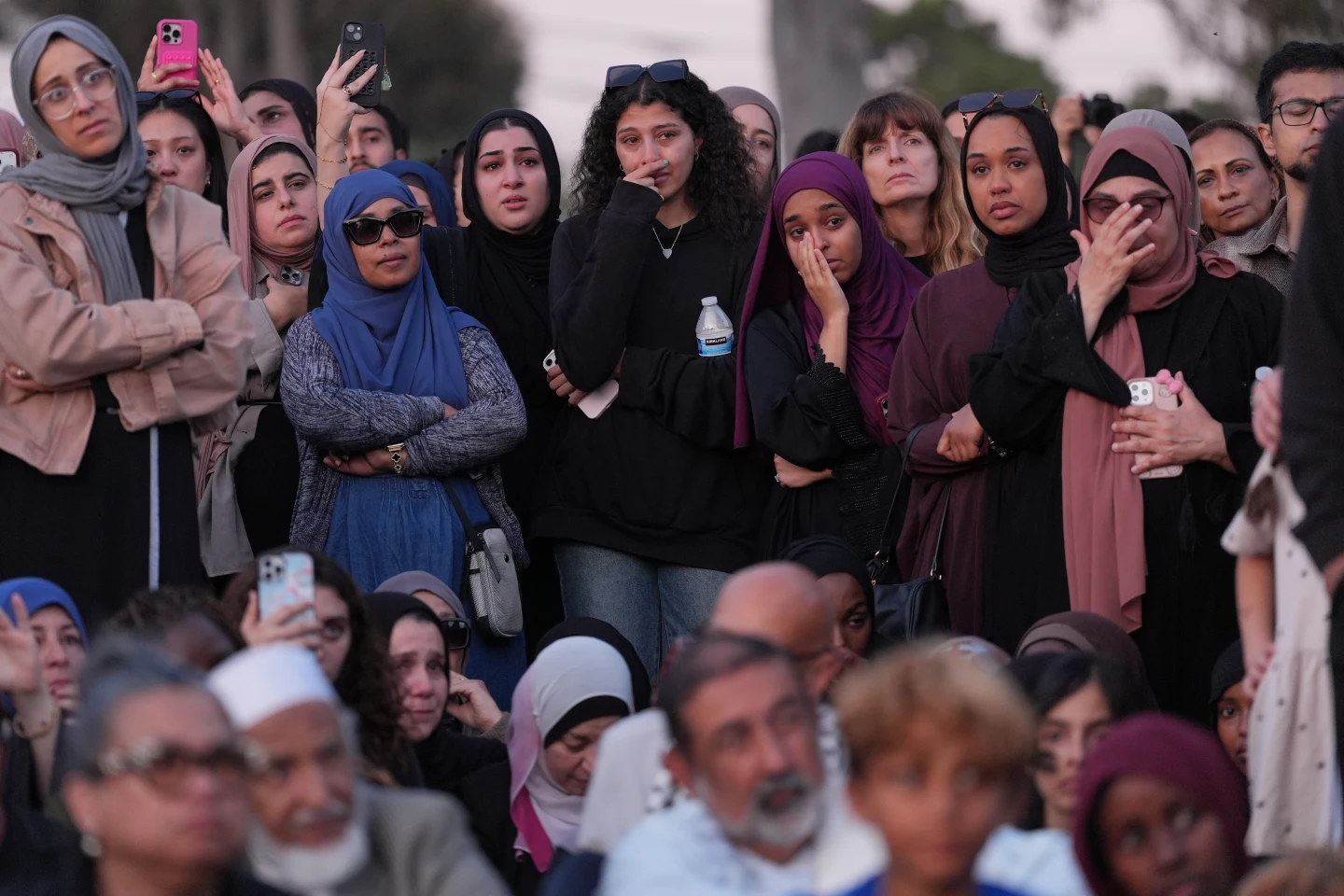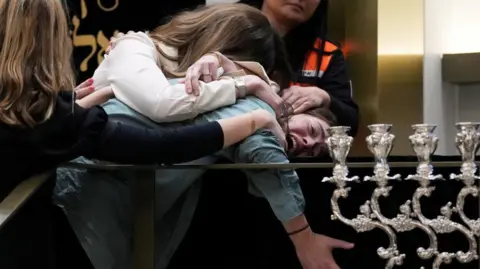
The first of the funerals for victims of the Bondi Beach shooting has taken place in Sydney, with thousands gathering to mourn Rabbi Eli Schlanger.
He was among 15 people killed when two gunmen opened fire on a festival marking the first day of Hanukkah. Australia's prime minister said that the attackers appear to have been inspired by Islamic State (IS) group.
Rabbi Schlanger, who was known as the 'Bondi Rabbi' and had helped organise Sunday's event, was born in the UK. His wife gave birth to their fifth child just two months ago.
Rabbi Levi Wolff, who opened the service, described his death as an 'unspeakable loss' for the community, the Chabad of Bondi, and 'the entire Jewish nation'.
Eli was ripped away from us, doing what he loved best, he said. Spreading love and joy and caring for his people with endless self-sacrifice in his life and in his death, he towered above as one of the highest and holiest souls.
Rabbi Wolff's poignant reflection captured the essence of the community's grief, as mourners remembered Rabbi Schlanger not just as a religious leader, but as a beloved member of their lives.
He was mourned by his father-in-law as a person beloved by the community. The 41-year-old was 'my son, my friend, my confidant,' Rabbi Yehoram Ulman told the congregation at the Chabad of Bondi.
My biggest regret was, apart from the obvious, to tell Eli more often how much we love him, how much I love him, how much we appreciate everything that he does and how proud we are of him, Rabbi Ulman said.
Yet amidst the sorrow, Rabbi Ulman encouraged Jewish people not to hide in the aftermath of the attack, pledging to continue a 31-year-old tradition of lighting the final candle on Bondi Beach during Hanukkah.
The funeral of Rabbi Yaakov Levitan was also held on Wednesday afternoon, while the funeral of 10-year-old Matilda, the youngest victim, is to take place on Thursday.
In the wake of the shooting, community leaders called for strength and unity, reflecting on the necessity to stand together against the recent surge of antisemitism.
Amid the tragedy, heroes also emerged, including those who attempted to save lives during the attack, reinforcing the community's resilience in facing adversity.
With political figures such as New South Wales Premier and former prime minister in attendance, the funeral not only served as a memorial for Rabbi Schlanger but also as a rallying point for vigilance against hate and violence.