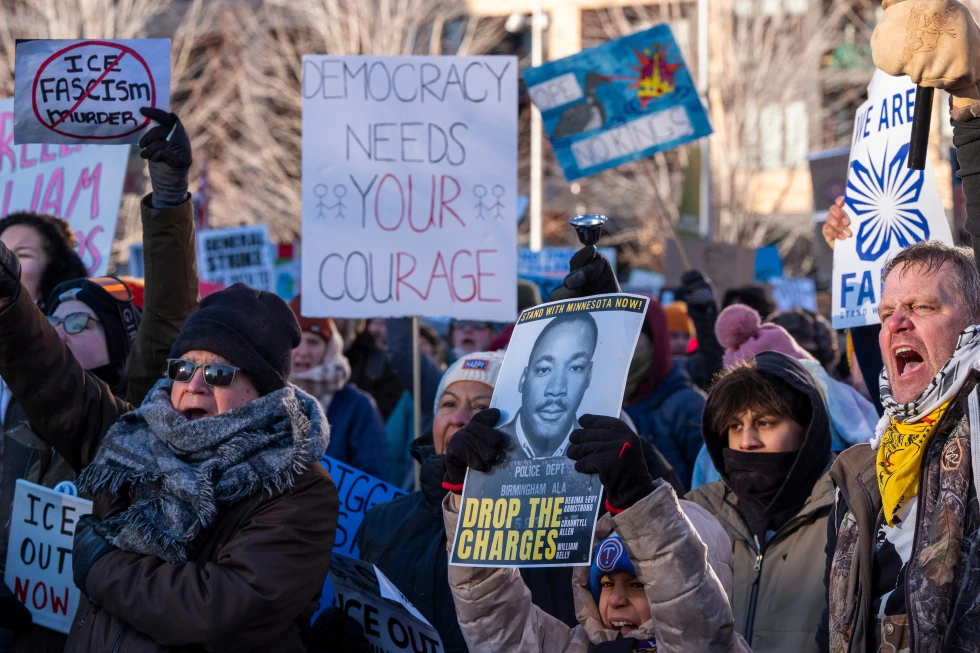
The shooting deaths of white protesters Alex Pretti and Renee Good by federal officers in Minneapolis followed a playbook that is painfully familiar to Black Americans: Authorities quickly moved to disparage the victims, only to be contradicted as more evidence emerged.
Black families who have lost loved ones to police violence said the killings in Minnesota have brought back painful memories of their own fights for justice as law enforcement agencies spun up narratives to suggest officers had no choice but to kill. Experts say that law enforcement often fails to correct misinformation that impacts cases significantly.
Timothy Welbeck, the director of the Center for Anti-Racism at Temple University, noted that it regrettably took the deaths of Pretti and Good to again bring this issue to light. “Black people have leveled a critique against law enforcement for as long as we’ve had policing in America,” he stated.
Clarence Castile, uncle of Philando Castile, drew parallels to the Pretti and Good cases, questioning the rapid conclusions drawn by authorities. He stated officials echoed similar claims during his nephew's death, indicating a persistent and troubling trend within law enforcement narratives.
Leonard Sipes, a former law enforcement officer, emphasized that releasing information should be measured and aim to protect investigations; rushing narratives can severely damage credibility. The deaths of the pair drew widespread attention, with some officials branding them as radicals with malicious intents, a characterization their families vehemently denied.
As Minnesota grapples with the aftermath of these shootings, calls for justice are reverberating across communities, exposing the deeply embedded issues of inequality and race in law enforcement practices, reminding us that the fight for accountability is far from over.