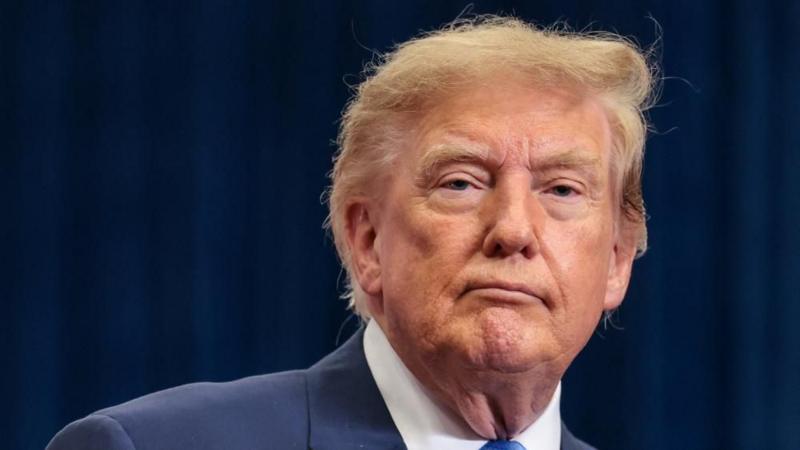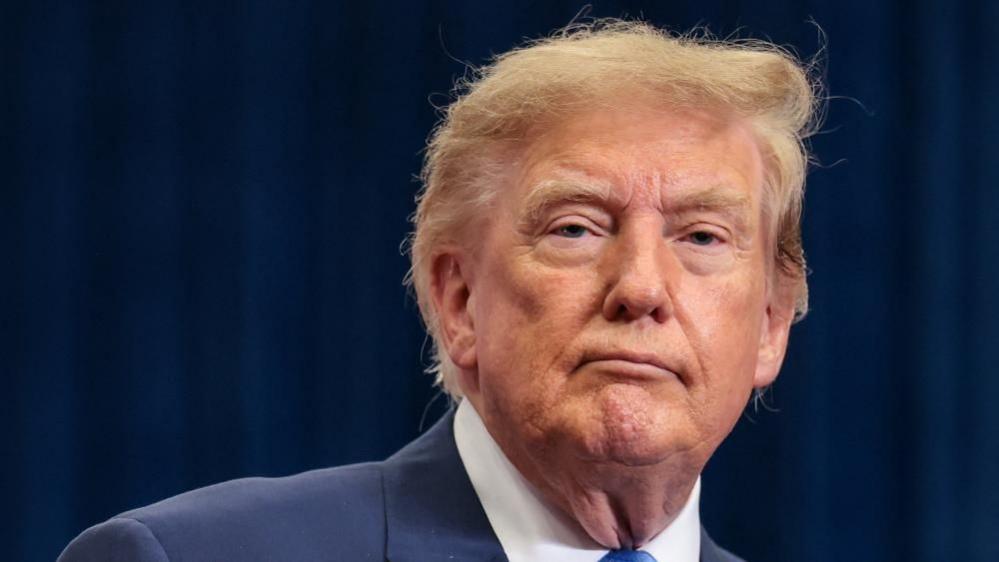
Many of those who tuned in to US President Donald Trump's news conference on Saturday were probably hoping to hear dramatic details of how US forces seized Venezuela's leader, Nicolás Maduro, in a pre-dawn raid.
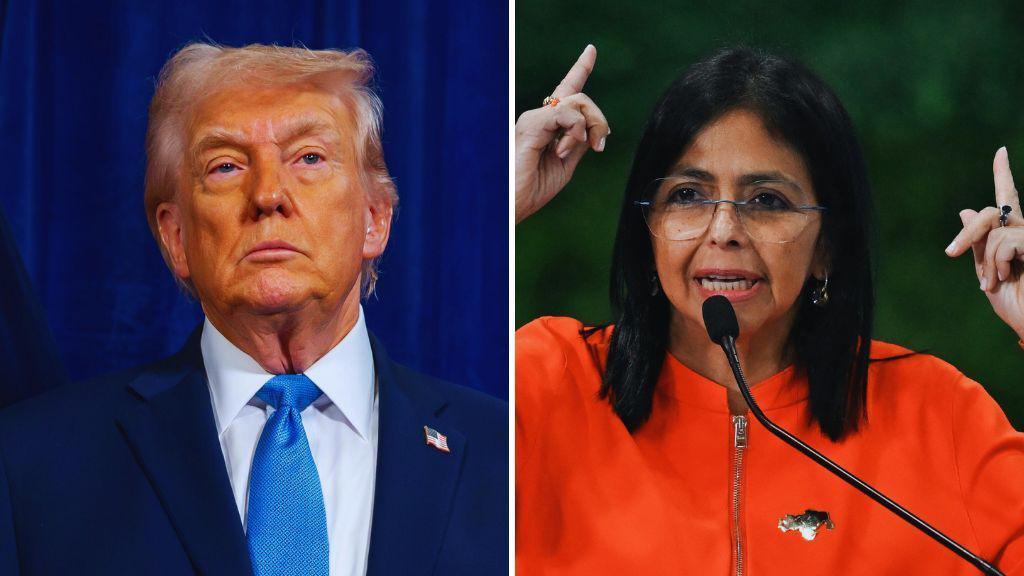
But arguably a more surprising moment came when Trump announced that now that Maduro was in custody, the US would 'run' Venezuela 'until such time as we can do a safe, proper and judicious transition'.
In another unexpected development, he added that Secretary of State Marco Rubio had been speaking to Maduro's Vice-President, Delcy Rodríguez, who he said was 'essentially willing to do what we think is necessary to make Venezuela great again'.
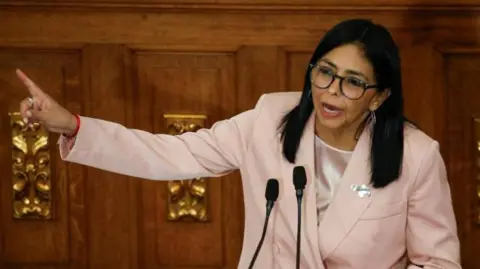
However, Rodríguez seemed less than cooperative in her own news conference later where she denounced Maduro's detention as a kidnapping and stressed that Venezuela would not become a colony.
Given these conflicting messages, many are asking who is now in charge in Venezuela.
Under Venezuela's constitution, it falls to the vice-president to take over should the president be absent. So, on the face of it, the Venezuelan Supreme Court ruling that Delcy Rodríguez was the country's acting president seems like a logical step. But most Venezuela watchers had expected the immediate aftermath of a US intervention to look differently.
The US - and many other nations - did not recognise Nicolás Maduro as Venezuela's legitimate president, having denounced the 2024 election as rigged. Maduro was declared president by Venezuela's electoral council (CNE), a body dominated by government loyalists. But the CNE never produced the detailed voting tallies to back up their claim and copies of voting tallies collected by the opposition and reviewed by the Carter Center suggested that the opposition candidate, Edmundo González, had won by a landslide.
In view of that, the US and dozens of other countries recognised González as the president-elect. González, a little-known former diplomat, had the backing of popular opposition leader María Corina Machado, whom he replaced on the ballot after she was barred from running for office by officials from the Maduro government.
With the security forces cracking down on the opposition in the aftermath of the election, González went into exile in Spain and Machado into hiding in Venezuela.
For the past 18 months, they have been urging Maduro to step down and lobbying for international support for their cause, especially from the US. Machado's profile was boosted by her winning the Nobel Peace Prize for 'her struggle to achieve a just and peaceful transition from dictatorship to democracy' in Venezuela.
But the US president stunned journalists when he declared that Machado did not have the 'support or respect' to lead the country. Trump's next remark may provide the answer as to why the Trump administration is now Maduro's loyal lieutenant - at least for now.
Trump quoted Rodríguez as saying 'we'll do whatever you want', adding 'she really doesn't have a choice'.
With Maduro's inner circle still seemingly in power in Venezuela, US officials may have considered that the smoothest transition would be provided by having someone from the existing government take over. In his news conference, Trump said that the US was 'ready to stage a second and much larger attack if we need to do so', which appears to explain why he thinks that Delcy Rodríguez has no choice but to do the US's bidding.
Rodríguez insisted that 'there is only one president in Venezuela, and his name is Nicolás Maduro' and called his seizure 'a kidnapping'.
'We will never again be a colony of any empire,' she insisted, promising to 'defend' Venezuela.
While she certainly did not sound like the person Trump had described as 'willing to do the US's bidding', there has been speculation that she may have struck a nationalistic note to keep Maduro's most loyal supporters on board. Quizzed about Trump's support for Rodríguez, Rubio stated that the US would make an assessment based on her actions, not her words.
In the short term, therefore, Venezuela looks likely to be governed by Delcy Rodríguez and Maduro's inner circle - as long as they meet the Trump administration's expectations. How long that may last will depend on whether Rodríguez can find a golden middle between accommodating Trump's requests and the Maduro base interests.
She may soon find herself between a rock and a hard place.