In brief
The article details how President Donald Trump’s attempt to overhaul congressional districts in states poised for the 2026 elections met with state‑level resistance in South Carolina and a legal setback in Alabama. It covers the political context, Supreme Court rulings, the role of party‑controlled state legislatures, and the impact on key representatives such as Rep. Jim Clyburn, while outlining the broader national redistricting war.
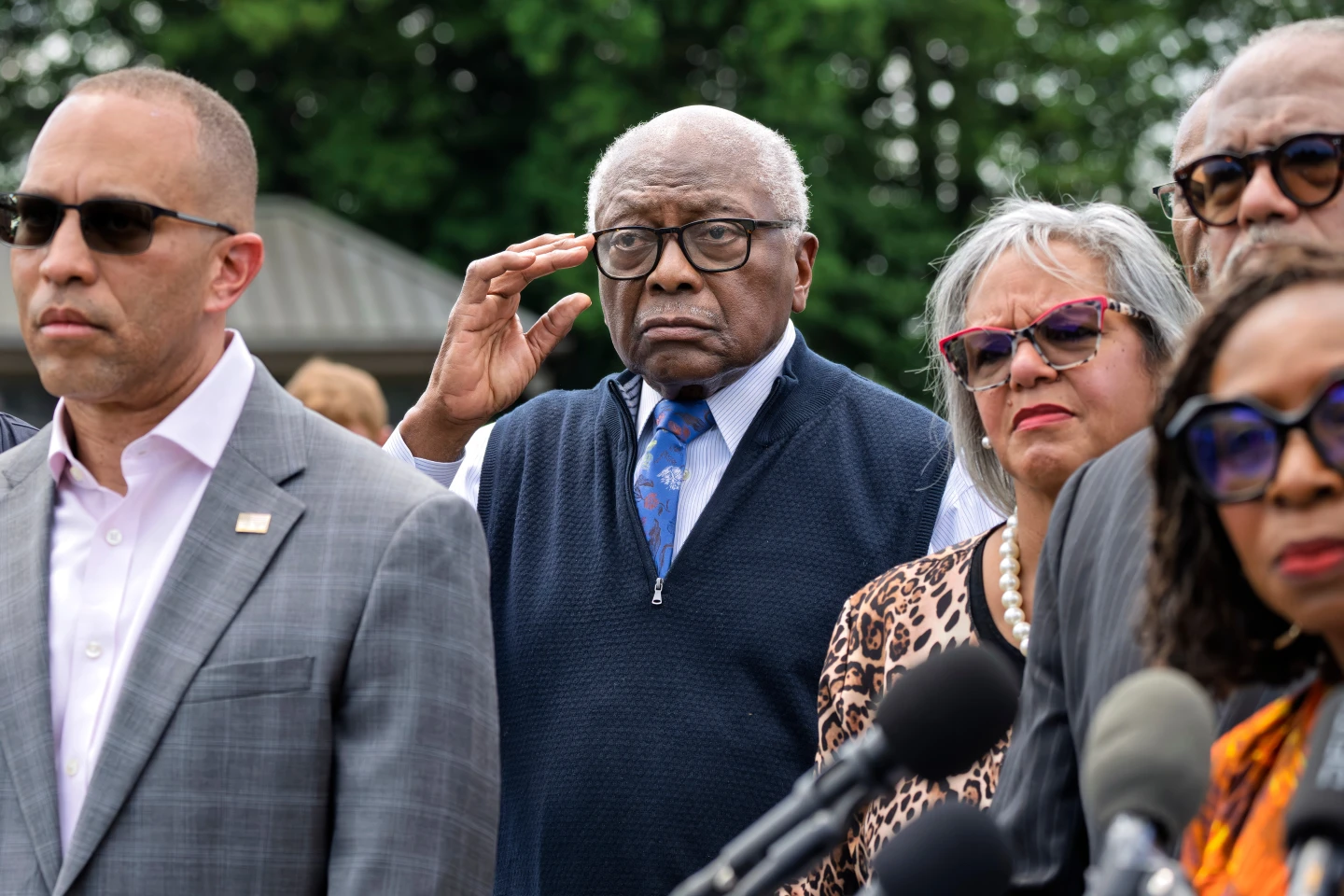
South Carolina, February 2026 (AP) — President Donald Trump’s push to reshape congressional districts ahead of the November elections hit a dual‑blow Tuesday, when state senators declined to adopt a new map and a federal court blocked a Republican‑backed plan in Alabama.Early in‑person voting began Tuesday in the state’s primaries. The SC Senate rejected a GOP proposal that would cancel those votes and instead hold new primaries under revised districts designed to help the party unseat a long‑time Democrat. Several senators said it was too late to change course.Republican Sen. Richard Cash remarked, “South Carolina citizens are going to the polls today. And neither my conscience nor common sense is going to let me stop an election that is already underway.”This setback in South Carolina is part of a broader Republican strategy—mobilized by Trump—to redraw voting district lines in a way that gives the GOP a better chance of maintaining its slim House majority in the midterms. Republicans are rushing to exploit a recent U.S. Supreme Court ruling that weakened minority protections under the federal Voting Rights Act, enabling them to target districts that favor Democratic voters.In Alabama, a three‑judge federal panel issued a preliminary injunction that prevents the state from using a Republican‑drawn congressional map that could help the GOP win an extra seat. The court ruled the plan “intentionally discriminated based on race” by giving only one Black‑majority district, and it ordered the continued use of a court‑imposed map granting two such districts.Attorney General Steve Marshall, a Republican, pledged a swift appeal to the U.S. Supreme Court and foresees an eventual victory.Nationally, Republicans stay ahead in the redistricting race. Democrats, who have faced setbacks themselves, praised the Alabama ruling as a win for communities of color. Marina Jenkins, executive director of the National Redistricting Foundation, said, “The fight for justice is far from over in states where politicians are enacting gerrymanders on top of gerrymanders to erase equal representation for communities of color.”The redistricting battle has spanned ten months. Voting districts are typically redrawn after each census at the start of a decade. Trump has urged Republican‑led states to undertake an early roll‑up, hoping to counteract the political headwinds that usually cause the president’s party to lose seats in the House during midterms.Since Trump first urged Texas to redraw its voting districts last summer, Republicans have enacted new House districts in Missouri, North Carolina, Ohio, Florida, and Tennessee. They hope to gain as many as 14 seats from these efforts, and perhaps 15 if they can secure a different map in Alabama.Democrats, meanwhile, estimate they could win five additional seats from new voter‑approved districts in California, plus one more from a new court‑imposed map in Utah. Democrats suffered an earlier setback when the Virginia Supreme Court invalidated a voter‑approved redistricting plan that could have helped them win extra seats.Redistricting discussions continue in Louisiana following an April high‑court ruling that struck down a majority‑Black congressional district as an illegal partisan gerrymander. The Louisiana House may soon vote on a new map that could eliminate a seat held by Democratic Rep. Cleo Fields and boost Republican chances of winning six of the state’s seven seats.The Congressional Black Caucus called on major corporations across the U.S., including those that had previously expressed support for voting rights and racial justice, to oppose redistricting moves that eliminate majority‑Black U.S. House districts. The caucus also urged Black athletes to boycott public universities in states gerrymandering congressional maps to eliminate seats held by Black lawmakers.Clyburn decries White House involvement in redistricting. More than 32,000 votes had been cast in South Carolina by 1 p.m. Tuesday on the first day of early voting for the June 9 primary, while Democrats worked to mobilize voters against a proposed new map. Former Rep. Jim Clyburn, who represents a district Republicans were trying to reshape, declared he would run for reelection regardless of the district shape. “I’m OK if it’s Trump + 20,” he said, “I would be running where I live.”The Republican‑led House had already passed a plan to reconfigure Clyburn’s district, void the results of the current congressional primaries, and hold new U.S. House primaries in August. Trump lobbied for the plan with at least two phone calls to Republican state Senate Majority Leader Shane Massey and phoned in to a private meeting of Republican senators earlier this month, keeping pressure high on social media.The debate stalled in the Senate, where Democrats opposed the plan and some GOP lawmakers worried that aggressive redistricting could backfire by adding Democratic voters to Republican‑held seats. Clyburn noted that the state’s last redrawing of districts after the 2020 census involved months of statewide meetings for public input and, although it favored Republicans 6‑1, the process was orderly and fair. He added, “When the map was challenged, the U.S. Supreme Court said, yes, this is constitutional, but now the White House says, to hell with the process, to hell with the Constitution, just do what we want.”___Chandler reported from Montgomery, Alabama, and Lieb from Jefferson City, Missouri.