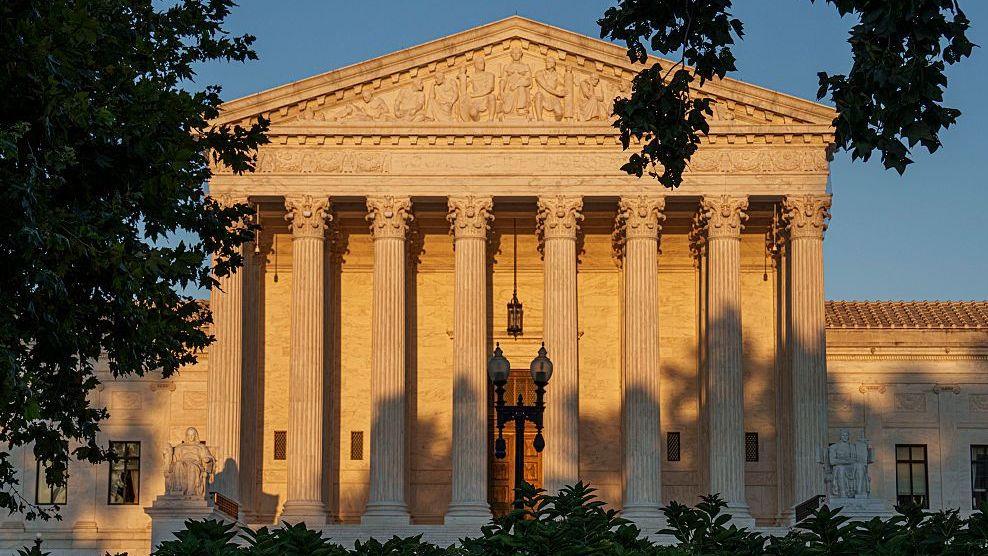

In a decision that could reshape the American electorate, the United States Supreme Court on Friday lifted a federal restriction that had barred the Trump administration from using the controversial Systematic Alien Verification for Entitlements (SAVE) database to identify potential non‑citizen voters.
The conservative majority held that the 1996 National Voter Registration Act forbids broad purges of voter rolls only weeks before an election, limiting the potential impact of the ruling ahead of the 2026 midterms. However, the order still allows state election officials to conduct individual citizenship checks with the SAVE system, a tool that has been in use in 27 states for the past year.
Justice Ketanji Brown Jackson, one of the three dissenting justices, warned that the decision could result in “the loss of voting rights for lawful voters.” “The harm caused by burdening or disenfranchising even a few lawful voters outweighs the non‑existent harm that the government experiences when it is prevented from taking an action that it likely lacks the authority to take,” the justice wrote in a statement.
The SAVE programme was originally created in 1986 to help verify the citizenship or immigration status of anyone applying for public benefits. In 2025 the Trump administration expanded its search parameters to allow bulk queries using sensitive Social Security data. Critics have cited several instances in which eligible voters were mistakenly flagged, such as in Texas, where at least 10 % of individuals identified as non‑citizens were in fact U.S. citizens.
Earlier this June, U.S. District Judge Sparkle L. Soonnan of the Eastern District of New York— a Biden appointee—declared the expanded system illegal, saying it “knowingly trampled on the privacy rights of US citizens.” The decision was upheld on appeal but was overturned by the Supreme Court.
The ruling has prompted a sharp backlash from voting‑rights groups. The League of Women Voters, the lead plaintiff in the case, called the decision “profoundly disappointing” and warned that millions of Americans could be “unlawfully targeted” weeks before the midterm elections.
Despite the controversy, several states, including Georgia, continue to use the SAVE system. Georgia Secretary of State Brad Raffensperger said his office “thoroughly vetted” the data and even interviewed voters to mitigate errors. State officials have generally maintained that guardrails exist to prevent wrongful disenfranchisement.
The Supreme Court’s decision comes amid an ongoing federal effort to reform the U.S. electoral system, including an attempt to curb mail‑in ballots—a move that was rejected by the Court last year.
Kayla Epstein contributed to this report.