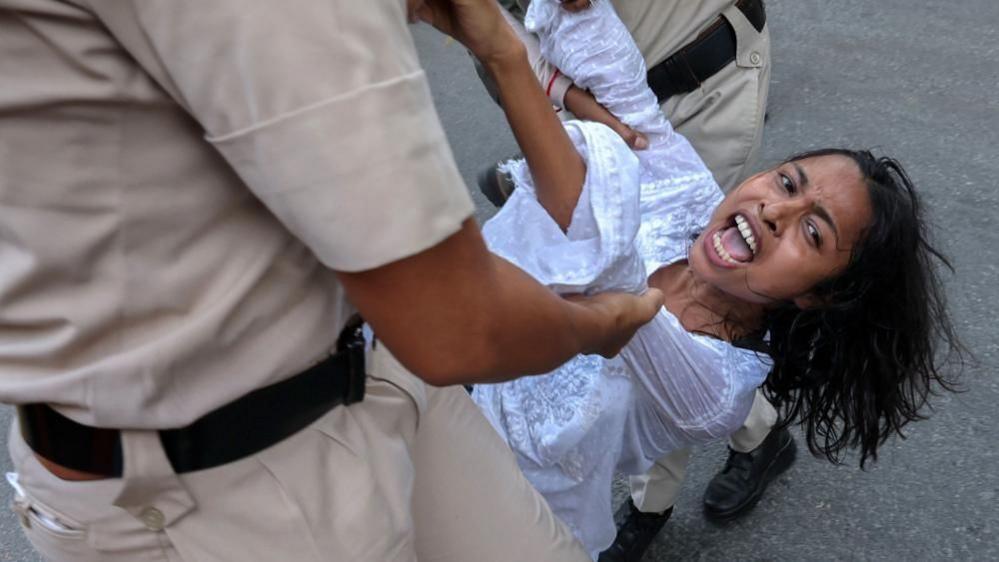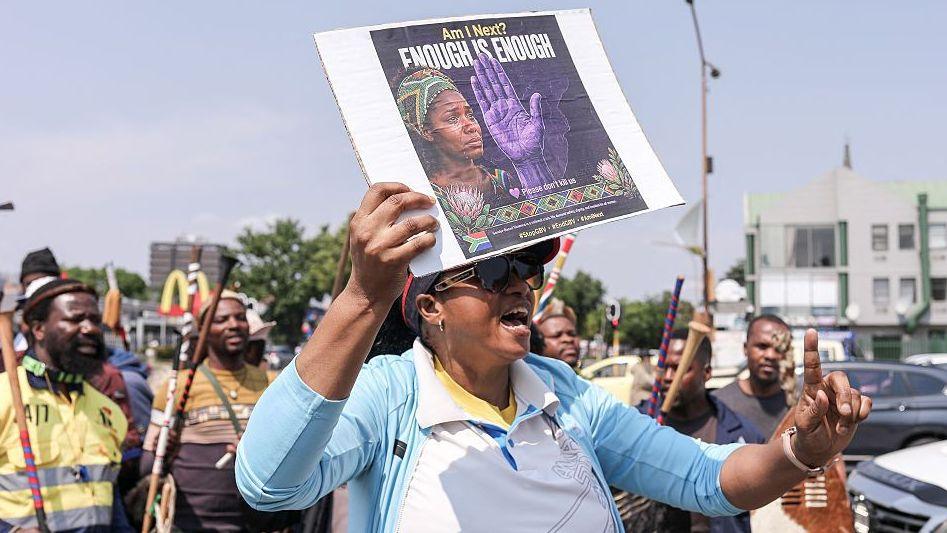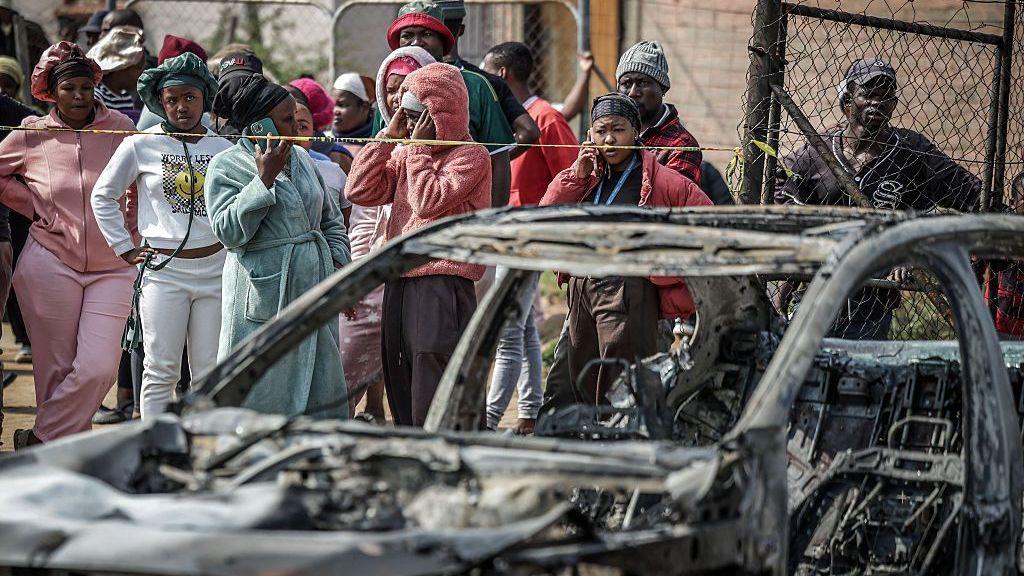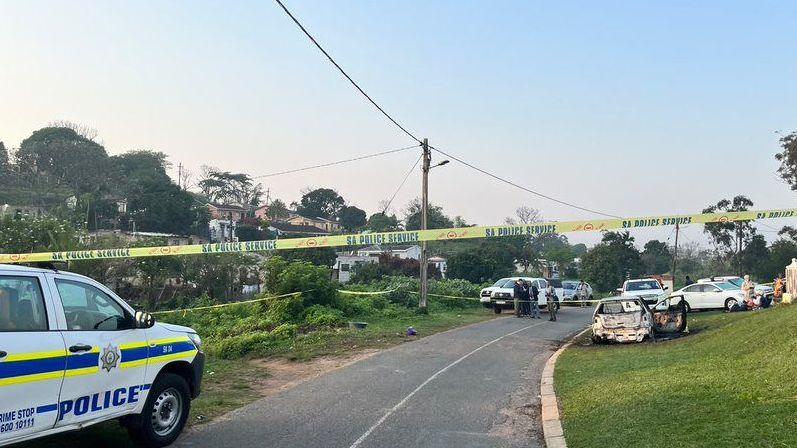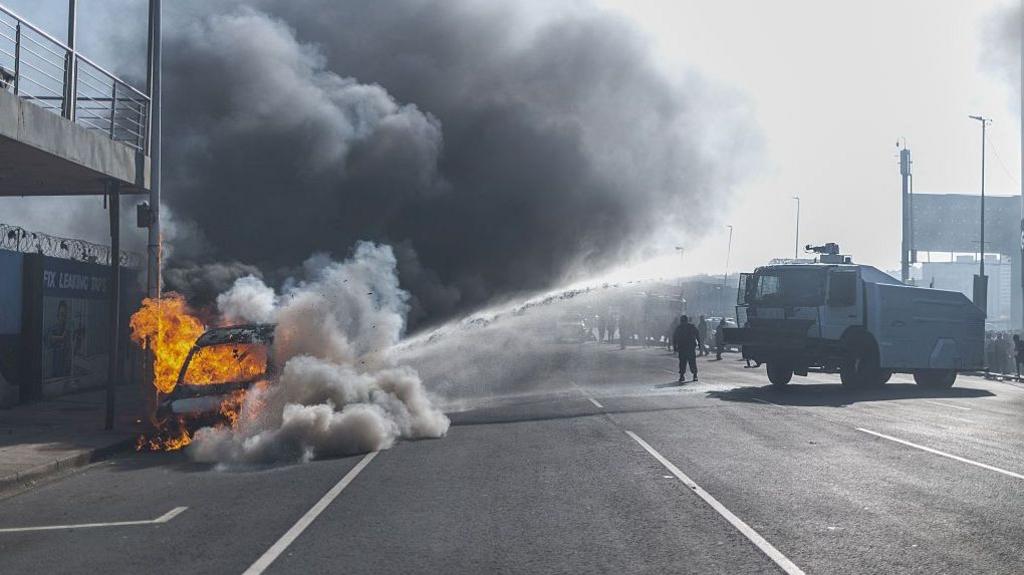
At least 24 vehicles were set ablaze and foreign‑owned shops looted on Thursday as anti‑immigration protests in Soweto and Durban turned violent, police say.
The unrest erupted in Soweto, a sprawling township outside Johannesburg, and Durban, a major port city on the east coast, when demonstrators, enraged by a Constitutional Court ruling that allows some undocumented migrants to apply for asylum, stormed crowds and buildings.
Police said 14 vehicles were torched in Durban and 10 in Soweto, and that gunshots were fired during confrontations between residents and foreign shopkeepers. The Department of Home Affairs noted that staff had been “overwhelmed” by the influx of asylum seekers and warned of “serious threats to public safety and order.”
Acting National Police Commissioner Lt Gen Puleng Dimpane condemned the destruction of property, while senior officer Xolani Fihla told SABC that no injuries had been reported – a claim that has since been scrutinised as the situation unfolded.
Dimpane said the new policy will still, he added, abide by the Constitutional Court ruling. The government pledged to pursue those responsible for the looting and arson and to revise its compliance with the ruling without giving full details.
The violence follows a July court decision that struck down pre‑existing restrictions preventing certain asylum seekers from applying based on how they entered the country or missed immigration deadlines. The ruling stated that migrants must be allowed to submit applications even if they entered without required documents.
The court’s decision sparked hundreds of people to gather at refugee reception centres, igniting the anger of anti‑immigration groups who fear the ruling will encourage undocumented migration. Government spokesman William Baloyi said “the ruling does not automatically give migrants refugee status or the right to remain permanently in South Africa.”
Earlier this year, anti‑immigration groups staged weeks of demonstrations demanding that undocumented foreign nationals leave the country by 30 June. Those protests forced tens of thousands of migrants to flee, with some returning home through repatriation programmes organised by their governments.
South Africa’s struggle with xenophobic attacks dates back nearly two decades. In 2008, more than 60 people were killed and tens of thousands displaced during widespread attacks on foreign nationals. The latest unrest comes against a backdrop of widespread poverty, deep inequality and unemployment, which affect roughly a third of the workforce.
Researchers say the sweeping claims that migrants take jobs, contribute to crime and press on public services are not supported by evidence. Yet the debate persists, reflecting underlying tensions in society. Despite economic difficulties, South Africa remains one of the continent’s main destinations for workers seeking employment, safety and better opportunities.
Additional reporting by Christian Parkinson in Johannesburg.