Political Turmoil in Australia Following Bondi Shooting Tragedy
Thursday had been earmarked for Australians to mourn the victims of last month's Bondi shootings. Those who had lost loved ones in the antisemitic attacks wanted it to be a chance to remember the dead, and spread light and kindness in their honour. Instead, it was a day dominated by a political row resulting in the collapse of the opposition coalition.
Veteran political commentator Malcolm Farr described the situation as unfortunate timing that showed a certain amount of self-indulgence among politicians. The fallout centered around reforms sparked by the tragedy, threatening the electoral prospects of two leaders and highlighting a disappointing month in Australian politics.
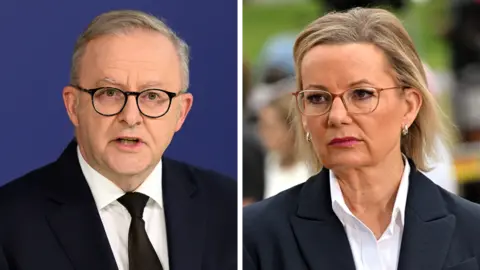
When two gunmen opened fire at a Hanukkah celebration in Bondi Beach, the immediate political blame game began. Community anger grew as politicians rushed to the scene, while the Prime Minister, Anthony Albanese, faced accusations of neglecting concerns from the Jewish community prior to the incident.
Heckles and Blame
As families prepared to bury their loved ones, politicians, including the opposition's leader, were heckled as they blamed one another instead of focusing on the tragedy. Albanese was criticized for his slow response in listening to the Jewish community's calls for a national inquiry into antisemitism.
Protests against the government's approach to Israel and antisemitism have heightened tensions, showing that the Bondi attack occurred in an environment already fractured by divisive issues.
A Society Already Fractured Over Israel-Gaza War
The shooting has become embroiled in the ongoing conflict over Israel and Gaza. Since the October 7 attack by Hamas on Israel, antisemitism has reportedly surged, feeding into a volatile environment where Albanese's handling of the situation faced heavy scrutiny.
No Simple Solutions and 'Either-or-ism'
Reforms post-Bondi focused on gun control, but these instead became a point of contention as the Liberal opposition and Jewish community felt bigger issues surrounding antisemitism were being ignored. The debate surrounding free speech versus hate speech remains an unresolved dilemma as demands for a royal commission into the attacks persist.
Albanese’s reluctance to call a royal commission—a powerful inquiry—was perceived as a failure to engage with the community's needs, especially as support for increased scrutiny of antisemitic incidents and responses to Islamophobia loomed large.
A Political Opportunity
The tragedy provided a political opening for Sussan Ley, opposition leader, but she found herself embroiled in difficulties retaining coalition unity over proposed hate speech laws. Political turmoil reached a breaking point as the National Party refused to support the legislation, leading to the collapse of the coalition.
Conclusion
The infighting between parties and the failures to unite over a collective response to the Bondi shooting may deepen public cynicism towards political leadership in Australia. Polls reflecting declining approval ratings for both Albanese and Ley suggest that the political landscape remains precarious as the country struggles to reconcile the impacts of this tragedy.