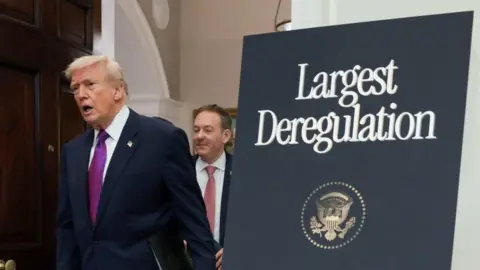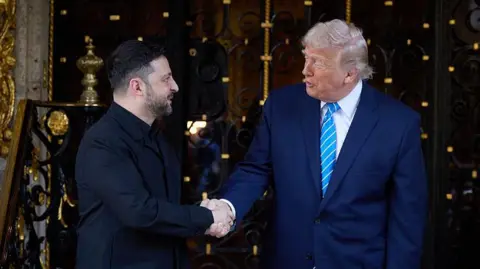
The much-anticipated talks lasted two-and-a-half hours, an achievement in itself as Presidents Trump and Zelensky had never before spent this long negotiating in a single meeting.
Afterward, optimism was visibly present at Mar-a-Lago. Donald Trump described it as a terrific meeting, with Volodymyr Zelensky echoing this sentiment, calling it a great meeting with great discussions on all the topics.
However, despite their upbeat tone, there was once again a lack of evidence showing any actual progress—consistent with previous talks throughout the year.
A critical question remains unanswered: will Ukraine have to concede territory in return for a promise of peace, a key demand from Russia allegedly backed by the US? While Zelensky did not publicly accept this notion, he did indicate the possibility of a referendum on any agreements to end the conflict.
Another vital aspect lacking clarity is security guarantees. Although President Zelensky claims these were agreed at 100% with the US, the specifics are unknown, and it remains uncertain if they would effectively deter further Russian aggression.
Importantly, despite any agreements made by Trump and Zelensky, there is no assurance that Russia would accept them. Russia has already dismissed proposals floated prior to these discussions, such as declaring a ceasefire and deploying a multinational force in Ukraine to monitor it.
This raises a pivotal question: how will Trump respond if Russia rejects the agreements made with Zelensky? So far, it seems Zelensky has been the one under pressure, with Trump's favorable rhetoric towards Putin suggesting a continuation of this dynamic.
Ultimately, despite the optimistic statements made by Trump and Zelensky, there is little indication that a lasting peace for Ukraine is imminent.