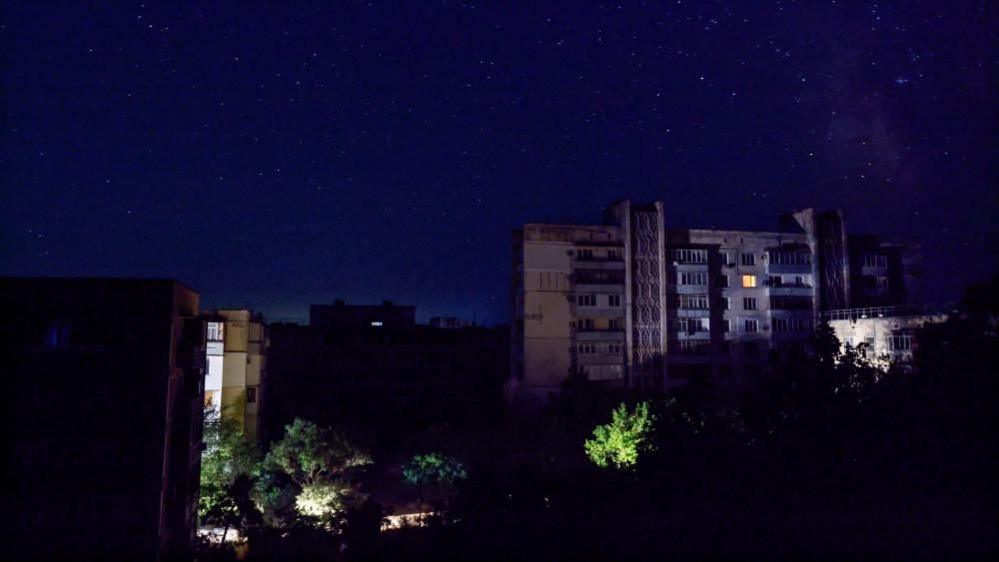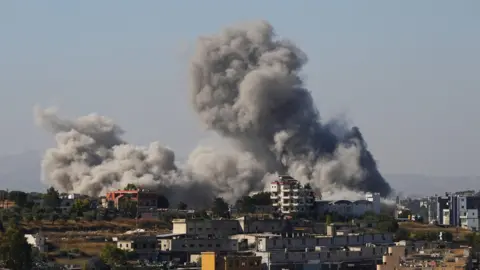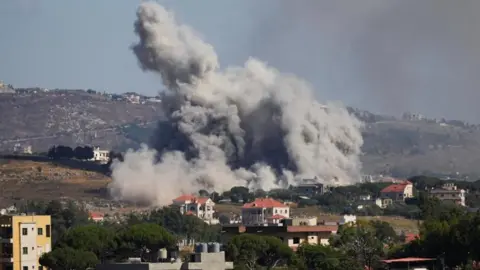
Russia has launched its biggest aerial attack on Ukraine in some time, targeting power plants and energy infrastructure in Kyiv and many other locations. The strikes were launched as temperatures dropped below minus 20C (-4F) overnight and have left more than 1,000 tower blocks in the capital without heating once again, damaging a power plant in the eastern city of Kharkiv beyond repair. President Volodymyr Zelensky said Russia was 'choosing terror and escalation' rather than diplomacy to end this war and called for 'maximum pressure' on Moscow from Ukraine's allies. The attack comes after a so-called 'energy truce' agreed by Donald Trump with Vladimir Putin expired at the weekend. It also coincided with NATO Secretary-General Mark Rutte's visit to Kyiv to meet President Zelensky and address the national parliament.
Donald Trump's initiative was meant to give diplomacy a chance. Negotiators from Russia and Ukraine are due to meet in Abu Dhabi for another round of talks coordinated by the US later this week. It is clear that Russia has other ideas.
The first explosions in Kyiv were heard soon after midnight, and the air raid lasted more than seven hours. Many residents spent the night sheltering in metro stations, with some managing to pitch tents on the platforms to escape the biting cold. President Zelensky reported that over 70 ballistic and cruise missiles were fired during the attack alongside 450 drones to overwhelm Ukraine's air defenses. Ukraine's Air Force managed to intercept only 38 of the missiles, emphasizing the urgent need for more air defense capabilities.
'Without pressure on Russia, there will be no end to this war,' Zelensky emphasized. Residents expressed anger against Russia and frustration over the ongoing attacks. Many are left without heating, relying on soup kitchens for hot meals, and facing frigid conditions in their homes. Despite the challenges posed by the attacks, there is little desire for compromise with Moscow. Ukrainian persistence and resilience in the face of adversity were highlighted by the sentiments of civilians, many of whom remain defiant in the face of worsening conditions.
Donald Trump's initiative was meant to give diplomacy a chance. Negotiators from Russia and Ukraine are due to meet in Abu Dhabi for another round of talks coordinated by the US later this week. It is clear that Russia has other ideas.
The first explosions in Kyiv were heard soon after midnight, and the air raid lasted more than seven hours. Many residents spent the night sheltering in metro stations, with some managing to pitch tents on the platforms to escape the biting cold. President Zelensky reported that over 70 ballistic and cruise missiles were fired during the attack alongside 450 drones to overwhelm Ukraine's air defenses. Ukraine's Air Force managed to intercept only 38 of the missiles, emphasizing the urgent need for more air defense capabilities.
'Without pressure on Russia, there will be no end to this war,' Zelensky emphasized. Residents expressed anger against Russia and frustration over the ongoing attacks. Many are left without heating, relying on soup kitchens for hot meals, and facing frigid conditions in their homes. Despite the challenges posed by the attacks, there is little desire for compromise with Moscow. Ukrainian persistence and resilience in the face of adversity were highlighted by the sentiments of civilians, many of whom remain defiant in the face of worsening conditions.