Despite Israel's claims of targeting militant infrastructure, criticism mounts regarding the overwhelming civilian toll, intensifying calls for a renewed humanitarian ceasefire.
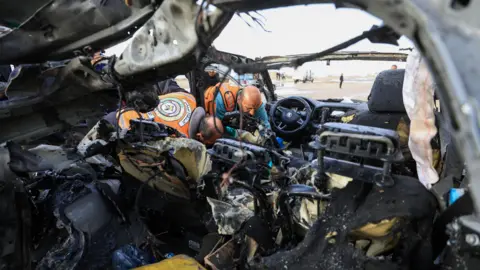
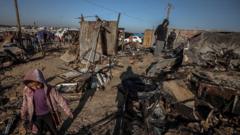
At least 37 Palestinians were killed by a series of Israeli airstrikes in a tented area for displaced civilians in Gaza, as confirmed by Gaza's Hamas-run civil defense agency. Eyewitnesses reported that the strikes led to massive flames consuming tents, leading to numerous casualties, including children. One survivor recounted waking in terror to find flames spreading quickly from one tent to another.
Many were left helpless, witnessing the tragic loss of life. A local resident mentioned that 10 members of a single family perished during the strike, highlighting the personal tragedies embedded within this conflict. The humanitarian organization Medicines Sans Frontiers (MSF) reported that, as a result of these strikes, they received several victims, mainly deceased, underscoring the severity of the situation.
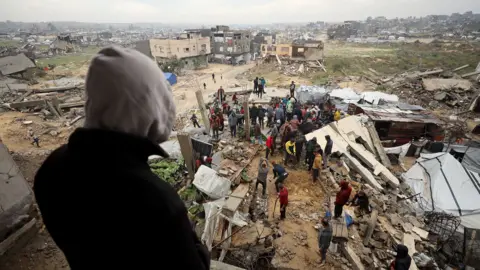
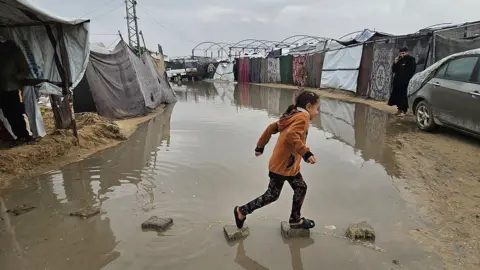
In addition to those killed in al-Mawasi, further airstrikes in northern Gaza resulted in additional fatalities, according to Gaza's civil defense agency. The Israeli military claimed that their operations targeted over 100 terror sites, asserting that measures had been taken to minimize civilian casualties. However, the humanitarian implications are dire, with major aid organizations declaring the aid system in Gaza on the verge of collapse, labeling it one of the most significant humanitarian crises of our generation.
The root of the ongoing conflict lies in Israel's attempts to pressure Hamas into releasing hostages, following the escalation of violence that began on October 7, 2023, with a Hamas attack killing approximately 1,200 Israelis. As hostilities continue, the number of casualties in Gaza reportedly exceeds 51,000, igniting international concern over the humanitarian catastrophe unfolding in the region.
At least 37 Palestinians were killed by a series of Israeli airstrikes in a tented area for displaced civilians in Gaza, as confirmed by Gaza's Hamas-run civil defense agency. Eyewitnesses reported that the strikes led to massive flames consuming tents, leading to numerous casualties, including children. One survivor recounted waking in terror to find flames spreading quickly from one tent to another.
Many were left helpless, witnessing the tragic loss of life. A local resident mentioned that 10 members of a single family perished during the strike, highlighting the personal tragedies embedded within this conflict. The humanitarian organization Medicines Sans Frontiers (MSF) reported that, as a result of these strikes, they received several victims, mainly deceased, underscoring the severity of the situation.
In addition to those killed in al-Mawasi, further airstrikes in northern Gaza resulted in additional fatalities, according to Gaza's civil defense agency. The Israeli military claimed that their operations targeted over 100 terror sites, asserting that measures had been taken to minimize civilian casualties. However, the humanitarian implications are dire, with major aid organizations declaring the aid system in Gaza on the verge of collapse, labeling it one of the most significant humanitarian crises of our generation.
The root of the ongoing conflict lies in Israel's attempts to pressure Hamas into releasing hostages, following the escalation of violence that began on October 7, 2023, with a Hamas attack killing approximately 1,200 Israelis. As hostilities continue, the number of casualties in Gaza reportedly exceeds 51,000, igniting international concern over the humanitarian catastrophe unfolding in the region.