In brief
Severe flooding threatens more than 800,000 inhabitants in Gaza as winter storms hit the region. The current humanitarian conditions are critical, with families displaced and living in makeshift tents amid a stalled peace process. Despite two months of a ceasefire, Israeli Prime Minister Benjamin Netanyahu insists that further negotiations cannot commence until the last Israeli hostages are returned, leading to ongoing tension and uncertainty in the region.
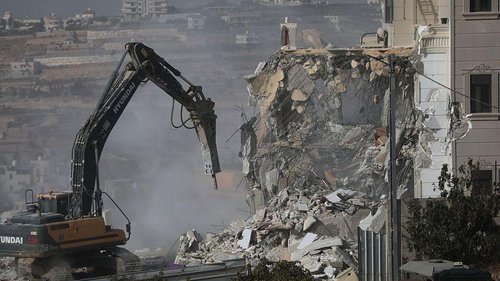
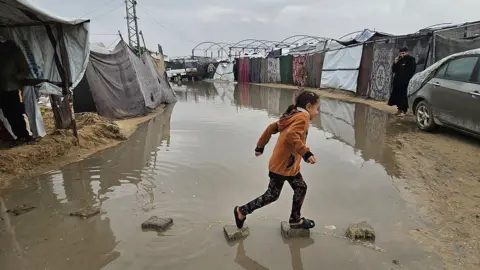
More than 800,000 Gazans are at risk from flooding, the UN says, as a powerful winter storm sweeps through the Strip. The heavy rain has already deluged camps, and led several buildings to collapse.
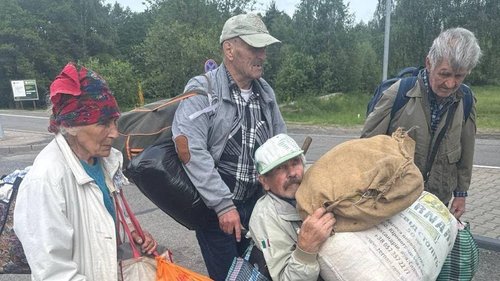
A steady stream of water trickles through openings in the tent Ghadir al-Adham shares with her husband and six children in Gaza City. Her family is still displaced after the war, and waiting for reconstruction to begin.
Here we are, living a life of humiliation, she told the BBC. We want caravans. We want our homes rebuilt. We long for concrete to keep us warm. Every day I sit and cry for my children.
Two months into an American-imposed ceasefire, Gaza is stuck in the first phase of Donald Trump's peace plan - its territory divided between the warring parties, its people still displaced and surrounded by rubble.
Plans for new homes - and new government - lie frozen in the next stage of Donald Trump's peace deal, as the search continues for Israel's last remaining hostage, Ran Gvili.
Israel's prime minister, Benjamin Netanyahu, has insisted Hamas must return all Israel's hostages – living and dead – before the two sides move on to the next, more difficult, stage of the peace deal.
But several searches of Gaza's rubble have so far shown no sign of him. Gvili was captured during the 7 October Hamas attacks - a police officer, recovering from a broken shoulder, who went to defend nearby kibbutz Alumim.
In response, a Hamas official told the BBC their allegations were untrue, and that Israel was trying to avoid implementing the agreement. But with no sign of Gvili's body, and pressure from Washington growing, his parents say they are counting on Israel's leaders not to move forward before their son is found.
Many in Israel believe it would be politically difficult for Netanyahu to carry out the next steps in the deal, including withdrawing Israeli forces further back towards Gaza's perimeter, if even one hostage is still missing in Gaza.
Both Israel and Hamas face difficult concessions in the next stage of the deal. For Hamas, it means handing over weapons and power. For Israel, handing over security to an international stabilisation force.
This is also why leaders on both sides may be hesitating, says retired General Israel Ziv, a former head of Israel's military Operations Directorate. Israel and Hamas are sharing the same interests not to move so fast into the second stage, he said.
Gaza is currently divided in two by the so-called yellow line, marking the limits of Israeli forces under the first stage of the ceasefire deal.
Gaza’s residents live under difficult conditions, facing floods that threaten their already challenging existence while the political impasse drags on.