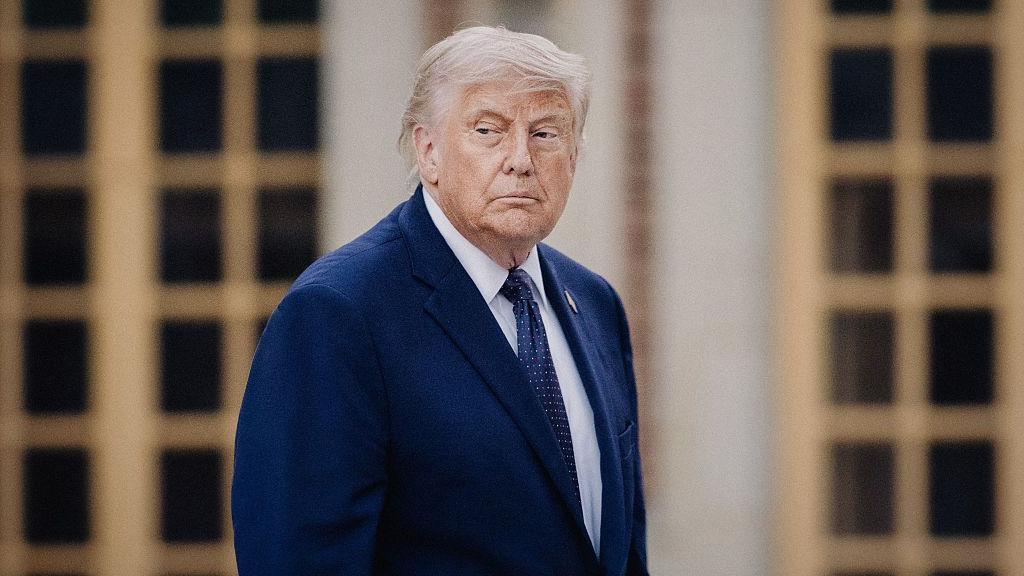
Indiana Republicans have defied intense pressure from President Donald Trump by rejecting his demands that they pass a voting map meant to favour their party in next year's midterm elections.
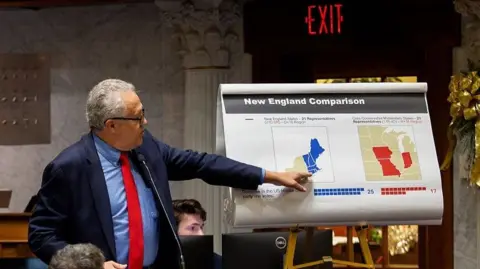
In one of the most conservative states in the US, 21 Republicans in the Senate joined all 10 Democrats to torpedo the redistricting plan by a vote of 31-19. The new map passed the House last week.
If it had cleared the legislature, Republicans could have flipped the only two Democratic-held congressional seats in the state.
Trump's call for Republican state leaders to redraw maps and help the party keep its congressional majority in Washington next year has triggered gerrymandering battles nationwide.
Republican-led Texas and Democratic-led California, two of the country's largest states, have led the charge.
Other states where redistricting efforts have been initiated or passed include Utah, Ohio, New Hampshire, Missouri and Illinois.
Republican state Senator Spencer Deery said ahead of Thursday's vote: My opposition to mid-cycle gerrymandering is not in contrast to my conservative principles, my opposition is driven by them.
As long as I have breath, I will use my voice to resist a federal government that attempts to bully, direct, and control this state or any state. Giving the federal government more power is not conservative.
Indiana Governor Mike Braun, a Republican, said he was very disappointed in the outcome.
I will be working with the President to challenge these people who do not represent the best interests of Hoosiers, he said on X, using a popular nickname for people from the Midwestern state.
The revolt of Indiana Republicans came after direct months of lobbying from the White House.
On Wednesday, Trump warned on his social media platform Truth Social that Republicans who did not support the initiative could risk losing their seats.
He directly addressed the Republican leader of the state Senate, Rodric Bray, calling him the only person in the United States of America who is against Republicans picking up extra seats.
To liberals, it was a moment of celebration. Keith Wildstyle Paschall described the mood on Thursday as jubilant.
There's a lot of relief, the Indianapolis-based activist told the BBC. People had thought that we would have to move on to a legal strategy and didn't believe we could defeat it directly at the statehouse.
The new map would have redistricted parts of Indianapolis and potentially led to the ouster of Indiana's lone black House representative, André Carson.
In the weeks before Thursday's vote, Trump hosted Indiana lawmakers at the White House to win over holdouts.
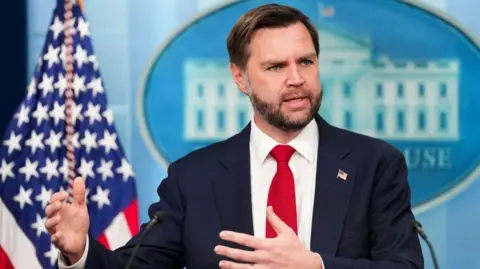
He also dispatched Vice-President JD Vance down to Indiana twice to shore up support.
Nearly a dozen Indiana Republican lawmakers have said they were targeted with death threats and swatting attacks over the planned vote.
Ultimately, this redistricting plan fell flat in another setback for Trump following a string of recent Democratic wins in off-year elections.
The defeat appears to have added to Republican concerns.
We have a huge problem, said former White House chief strategist Steve Bannon during his podcast, The War Room.
People have to realise that we only have a couple opportunities, he said.
If we don't get a net 10 pickup in the redistricting wars, it's going to be enormously hard, if not impossible, to hold the House.
Texas was the first state to respond to Trump's redistricting request.
After a lower court blocked the maps for being drawn illegally based on race, the Supreme Court allowed Texas Republicans to go ahead.
The decision was a major win for Republicans, with the new maps expected to add five seats in their favour. California's map is also expected to add five seats for Democrats.